Phaselis
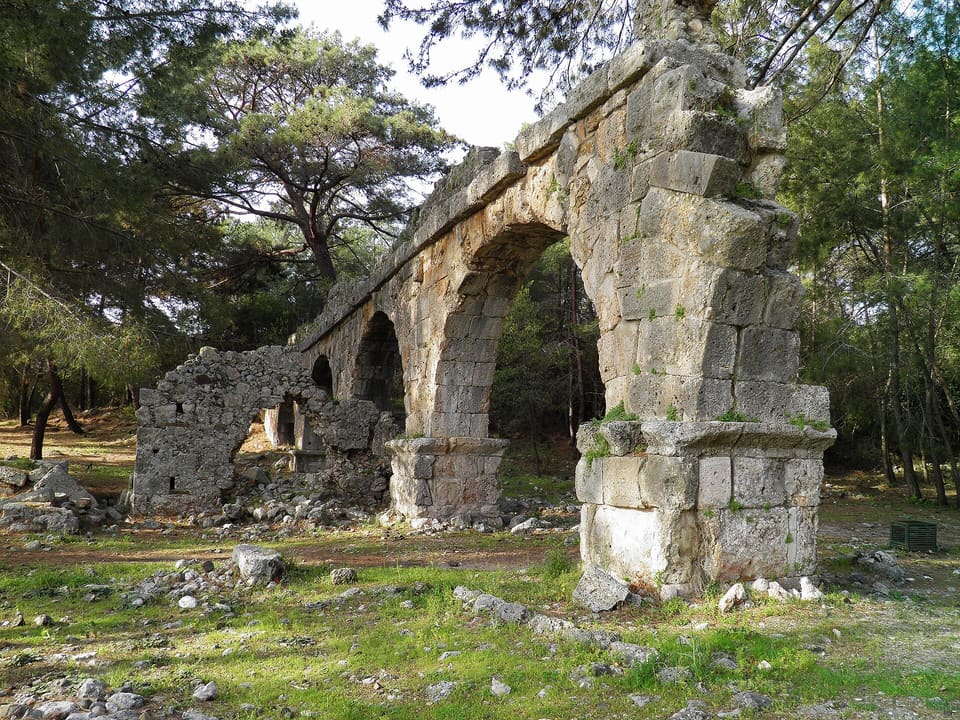
A port city founded by settlers from Rhodes, with three harbours and a paved main street running between them under the pines. Aqueduct arches still stand by the road in.
Plan your visit
For a first visit at an easy pace.
Opening hours and prices change: see muze.gov.tr (opens in a new tab).
Times are our estimates. Distances are straight lines.
Where it is and how to get there
On the Mediterranean coast, by the village of Tekirova in Kemer district, Antalya province: about 55 km by the coast road from Antalya and some 16 km south of the resort town of Kemer. The ruins lie on a small peninsula between the pine forest and the sea.
The walk, with what you’re looking at
The paved main street is the spine of the walk, with a harbour at each end. Pine trees shade much of the site.
- The aqueduct
On the way in: Roman arches that brought water to the city. Before them, wells and cisterns were enough.
- South Harbour
The main harbour and the best preserved of the three, where the main street begins.
- Hadrian’s Gate
A gateway built in honour of the emperor Hadrian’s visit, at the south end of the street.
- The main street
About 25 m wide and paved with smooth stones, with shops and public buildings on both sides.
- The baths
Two Roman baths, one large and one small. The small one shows how the rooms were heated.
- The theatre
Among the buildings near the street: the theatre and a monumental fountain.
- North and Central harbours
The other two harbours, each in its own cove. The Central one is also called the Battle (War) Harbour. Walls along the shore kept out pirates.
Phaselis
A trading port on a small peninsula, built around three harbours. Greeks, Persians, pirates and Rome each held it, and then it was left to the pine trees.
- 7th century BCA port is founded
Settlers, from Rhodes by the usual account, found the city on a small peninsula with three harbours. Its living is sea trade, and its coins show ships.
- Persians, then AlexanderThe prize of the coast
The city is ruled by the Persians. Alexander the Great comes through, and the ministry says Phaselis opened its gates to him. Its harbours are what everyone wants.
- 1st century BCPirates
Pirates of the southern coast use the harbours, and the city is caught up in the Roman campaign against them. Roman forces under Publius Servilius take it.
- 2nd century ADA gate for Hadrian
The city builds a gateway at the south harbour to honour a visit by the emperor Hadrian.
- AD 451A bishop of Phaselis
The Christian bishop of Phaselis, Fronto, attends the Council of Chalcedon.
- By the early 13th centuryLeft to the pines
The Seljuks favour Alanya and Antalya as their ports. Phaselis fades and is abandoned, and the forest grows into the ruins.
Photographs
6 photographs from Wikimedia Commons, each with its author and licence.
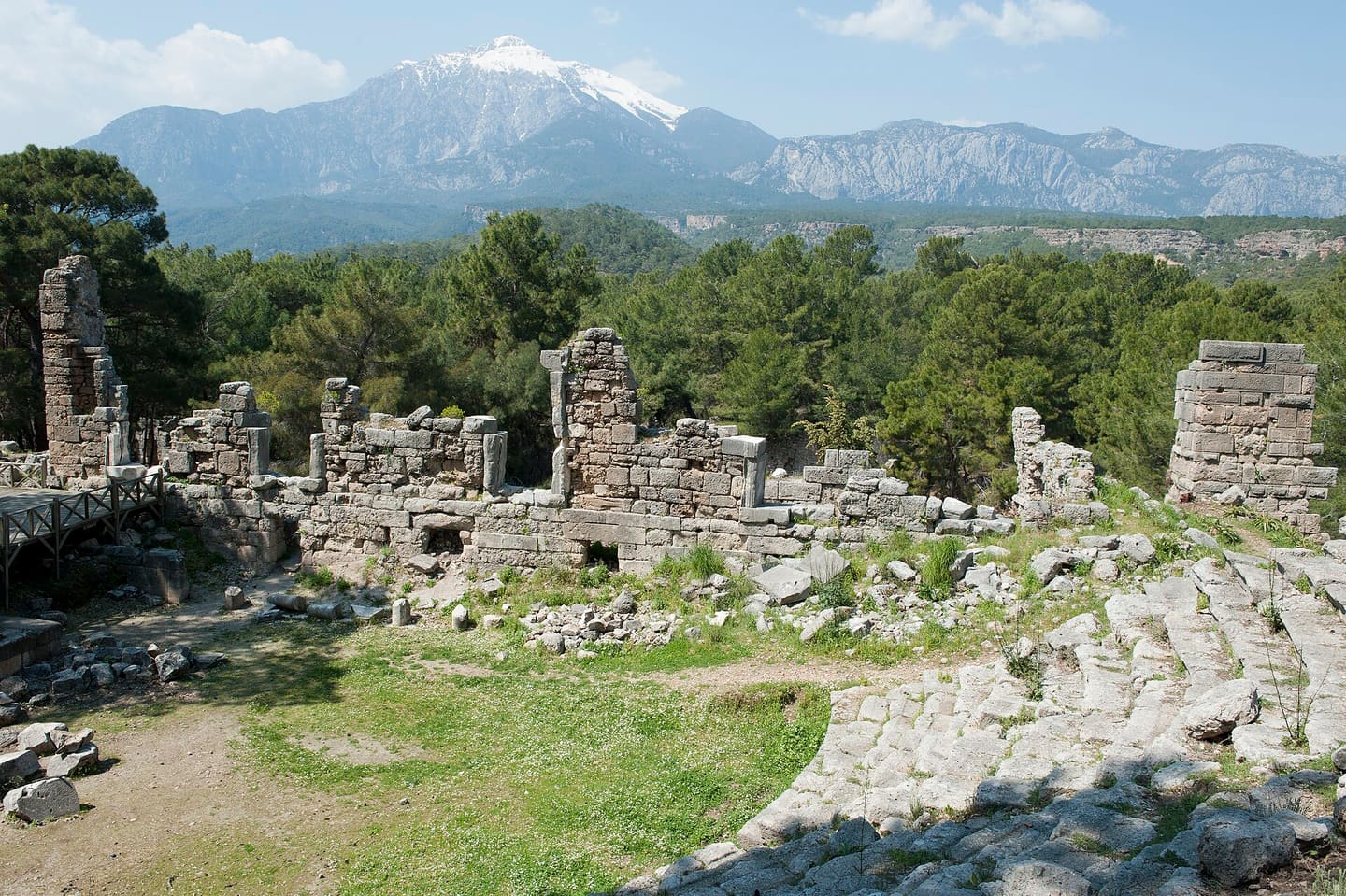
Photo: Dosseman · CC BY-SA 4.0 (opens in a new tab) · Wikimedia Commons (opens in a new tab)
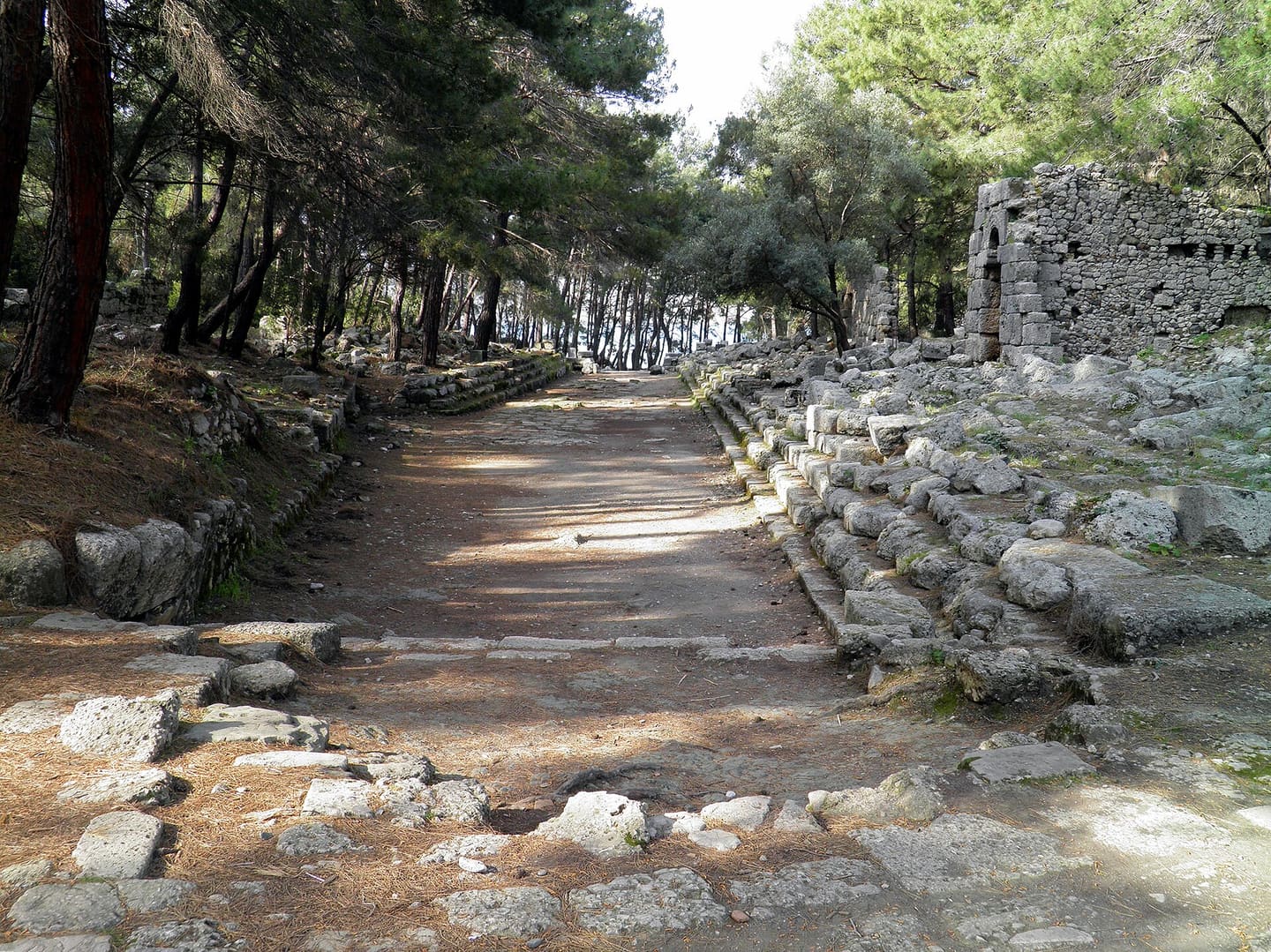
Photo: Carole Raddato from FRANKFURT, Germany · CC BY-SA 2.0 (opens in a new tab) · Wikimedia Commons (opens in a new tab)
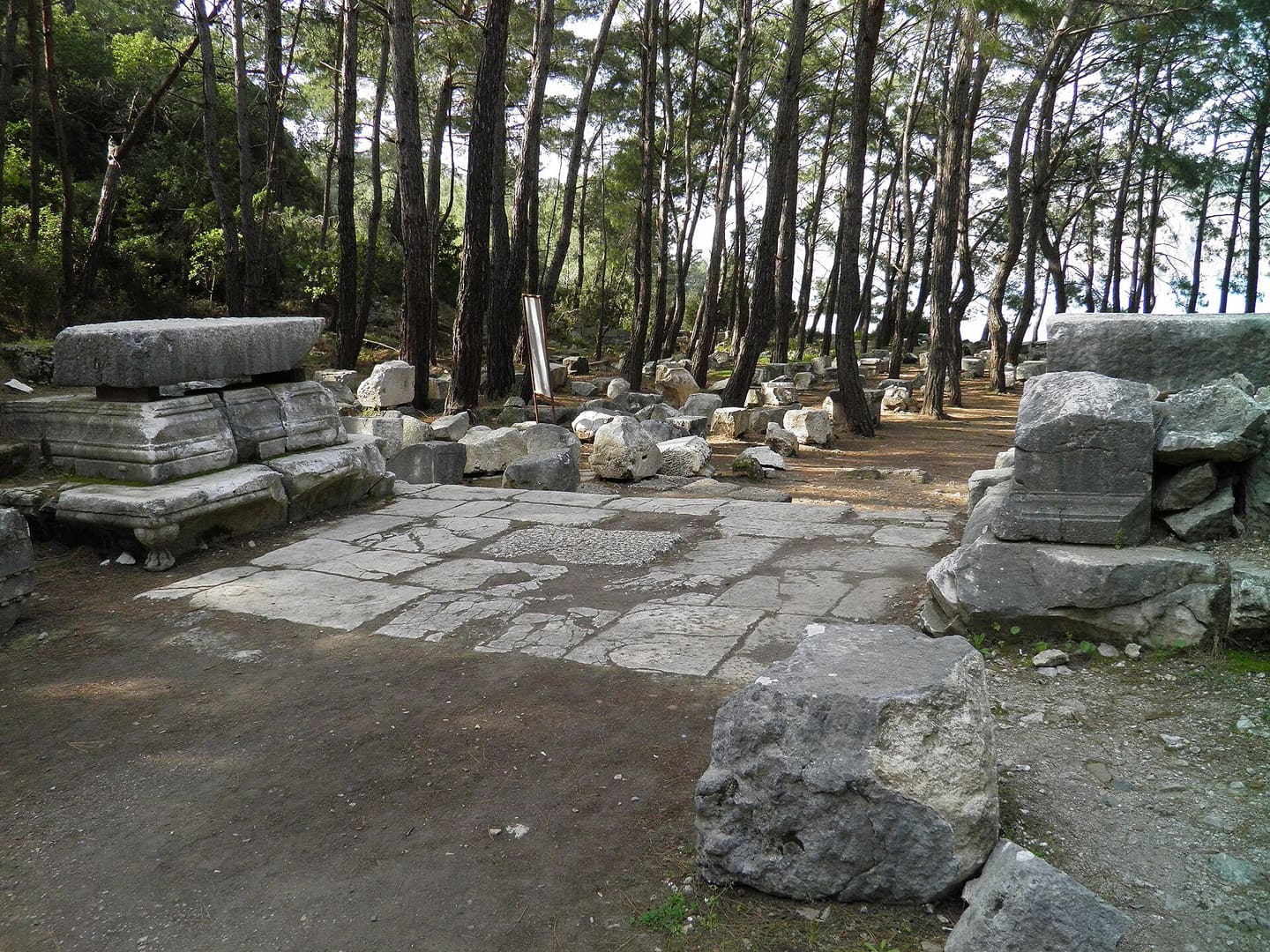
The gate was built in honour of a visit by the emperor Hadrian.
Photo: Carole Raddato from FRANKFURT, Germany · CC BY-SA 2.0 (opens in a new tab) · Wikimedia Commons (opens in a new tab)
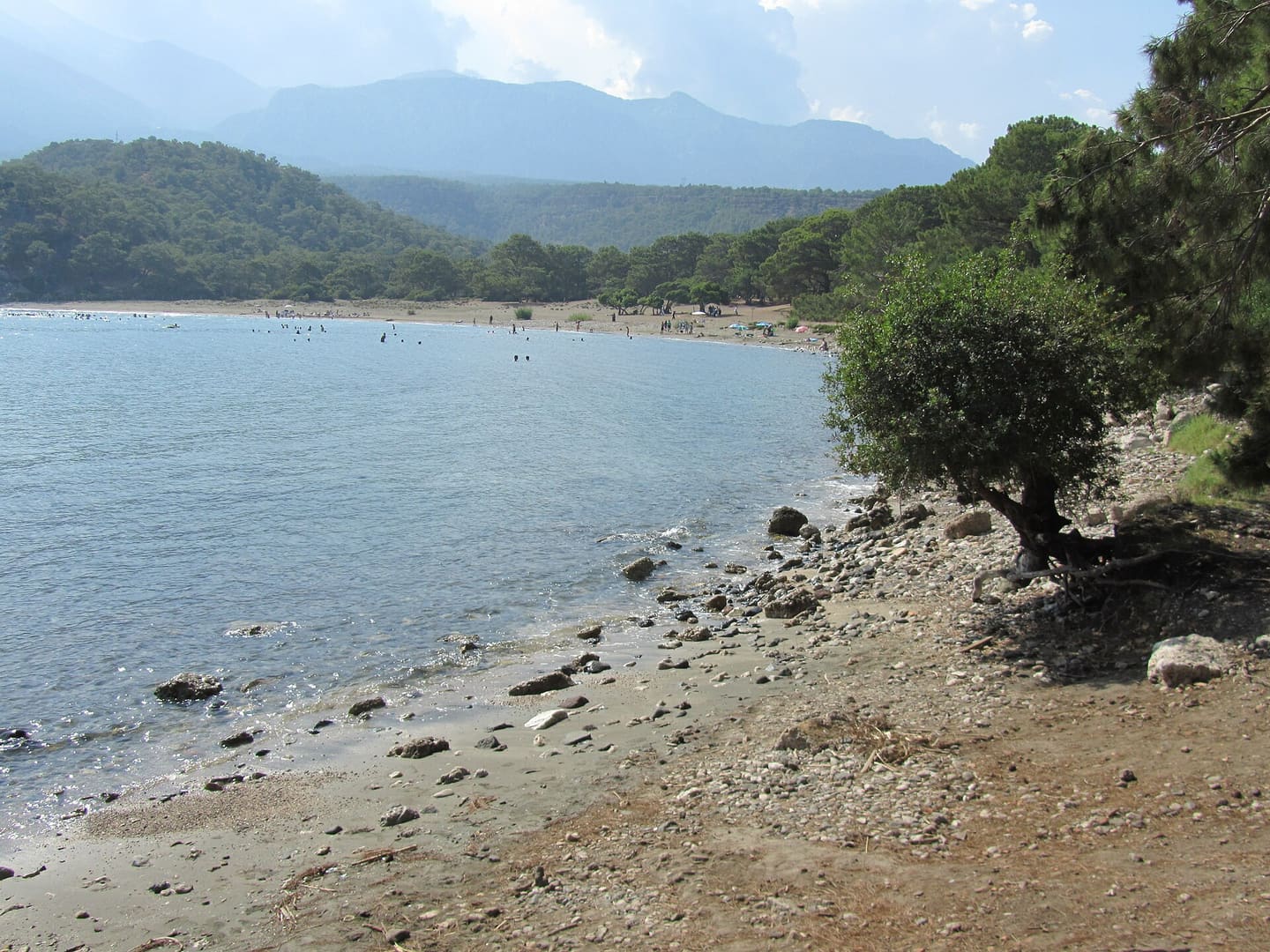
Photo: Vadim Indeikin · CC BY-SA 3.0 (opens in a new tab) · Wikimedia Commons (opens in a new tab)
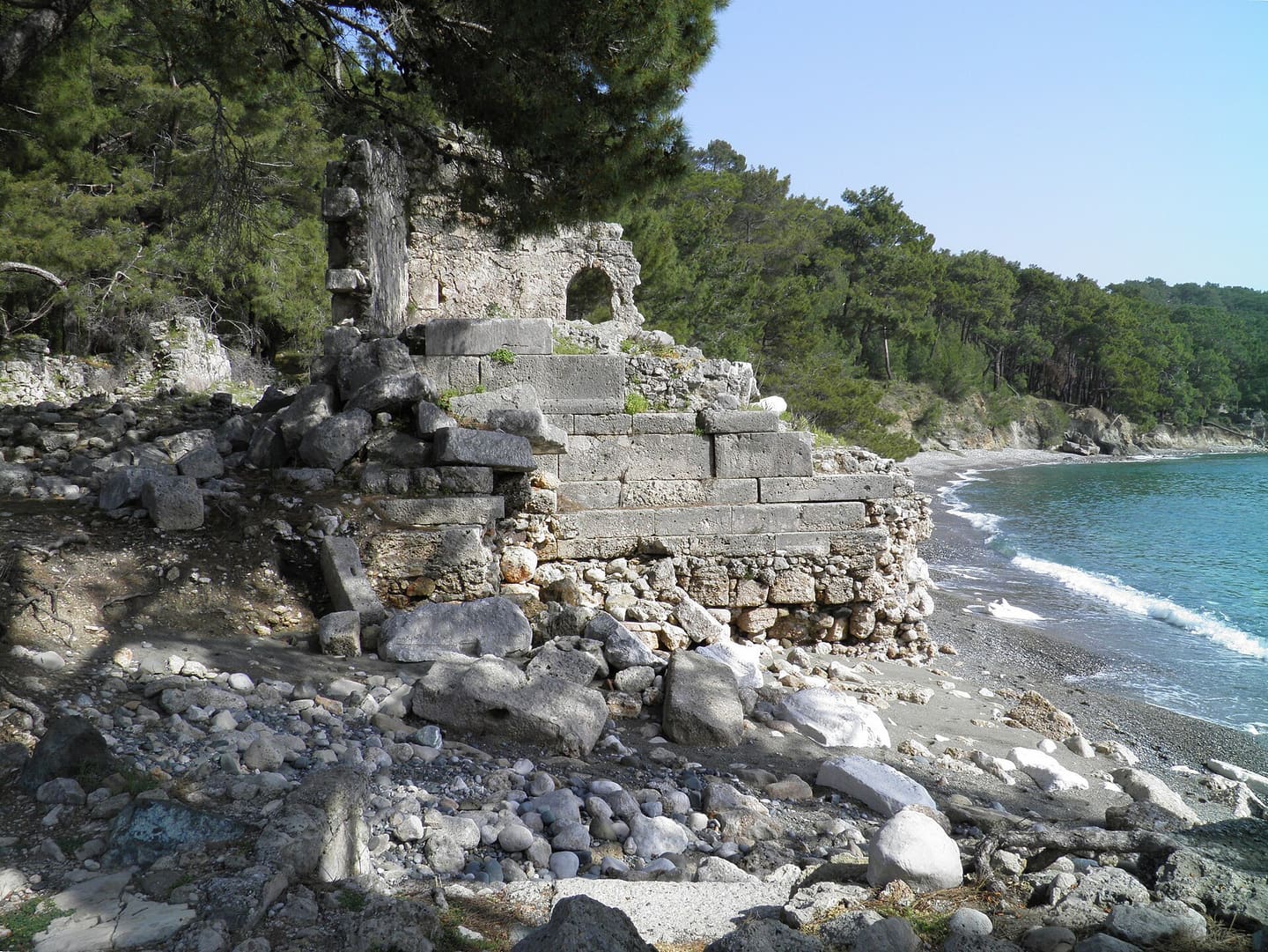
Photo: Carole Raddato from FRANKFURT, Germany · CC BY-SA 2.0 (opens in a new tab) · Wikimedia Commons (opens in a new tab)
Good to know
- Pine trees shade much of the ruins. Bring water all the same.
- Phaselis has three harbours, each in its own cove: see all three. The South Harbour is the best preserved.
- Olympos, another ancient port further down the coast, is on the ministry’s list of sites nearby, so the two make an easy day together.
- The ministry has an English brochure for the site: see its page on muze.gov.tr.
Also nearby
- 16 kmOlympos
City, Lycian–Byzantine
- 30 kmRhodiapolis
City, Lycian–Roman
- 40 kmLimyra
City, Lycian–Roman
- museumAlanya Museum
Bronze Herakles
- museumAntalya Museum
Perge statues, Weary Herakles
- museumElmalı Museum
Elmalı treasure
- museumKaş Museum
Location precise · Source (opens in a new tab)