Nemrut Dağ
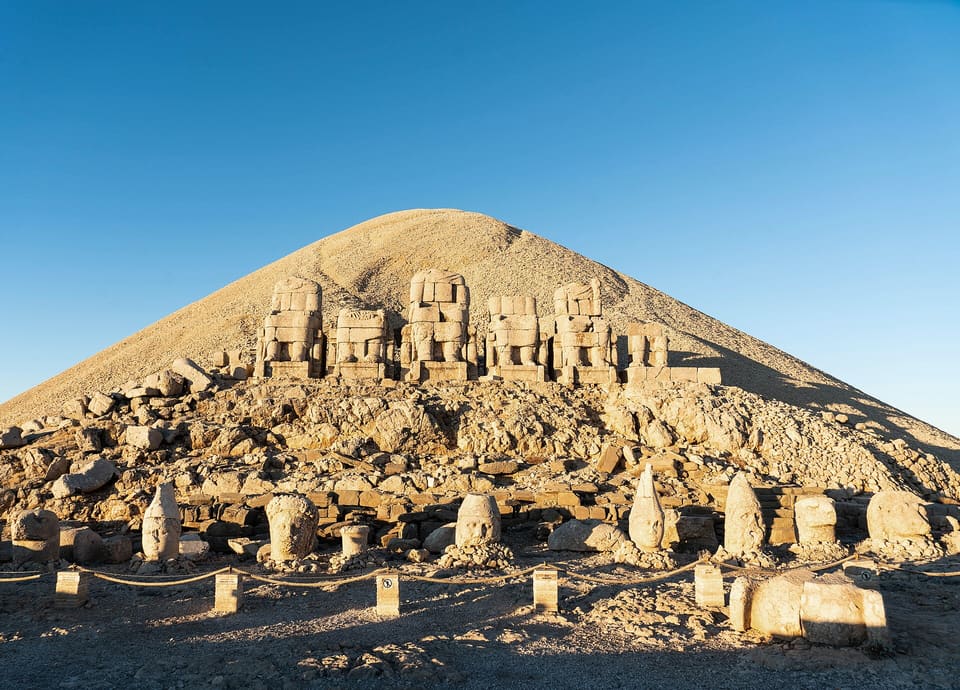
On a summit about 2,150 m high, King Antiochus I of Commagene raised his tomb mound between colossal statues of gods and of himself; their heads now sit on the ground. Sunrise here is the famous visit. World Heritage since 1987.
Plan your visit
For a first visit at an easy pace.
Opening hours and prices change: see muze.gov.tr (opens in a new tab).
Times are our estimates. Distances are straight lines.
Where it is and how to get there
In the Taurus mountains of Adıyaman province, in south-east Türkiye, on a summit above 2,100 m that looks over the Euphrates valley and the plain. The ministry gives its address as Karadut village, on the approach from the south.
The walk, with what you’re looking at
The sanctuary has three terraces round the great mound: east, north and west. Allow time to walk between them at altitude.
- East terrace
The best preserved. Five seated gods about 8 to 10 m tall stand in a row: the king himself, the goddess Commagene, Zeus, Apollo and Herakles. Lions and eagles guard the ends. The heads lie on the ground in front.
- North terrace
A ceremonial road that links the east and west terraces, lined with stone slabs and bases for portraits of the king’s ancestors.
- West terrace
A twin of the east, with a relief of the king shaking hands with a god. A slab with a lion and stars gives the date 7 July 62 BC.
- The tumulus
The huge mound above the terraces, piled from broken stone, about 50 m high. It is thought to cover the king’s tomb, but no burial chamber has been found.
Nemrut Dağ
A king who made himself a god. Antiochus I of Commagene built his tomb on a summit and lined it with colossal statues, half Greek and half Persian, and the heads have lain on the ground ever since.
- Before 62 BCA small kingdom between empires
Commagene, once part of the Seleucid empire, lies on the borderland between Rome, Parthia and Armenia. For stretches it rules itself.
- About 70 BCAntiochus becomes king
Antiochus I rules for some 40 years. He claims ancestors from both Persia and Macedon, and calls himself “Theos”, a god.
- 62 BCA tomb among the gods
On the summit he builds a tomb-sanctuary: a mound of crushed stone, with terraces of colossal statues of himself and gods who are half Greek and half Persian. A relief of stars gives the date 7 July 62 BC.
- About 31 BCThe king dies
No tomb chamber has ever been found, though the inscriptions say the king lies here.
- LaterThe heads come off
The statues’ heads are separated from their bodies and set on the ground. The damage to the noses looks deliberate, but nobody knows when it happened.
- 1881Found again
A German engineer, surveying routes for the Ottomans, finds the site, which had been forgotten.
- 1987World Heritage
Mount Nemrut is put on the UNESCO World Heritage List.
Photographs
6 photographs from Wikimedia Commons, each with its author and licence.
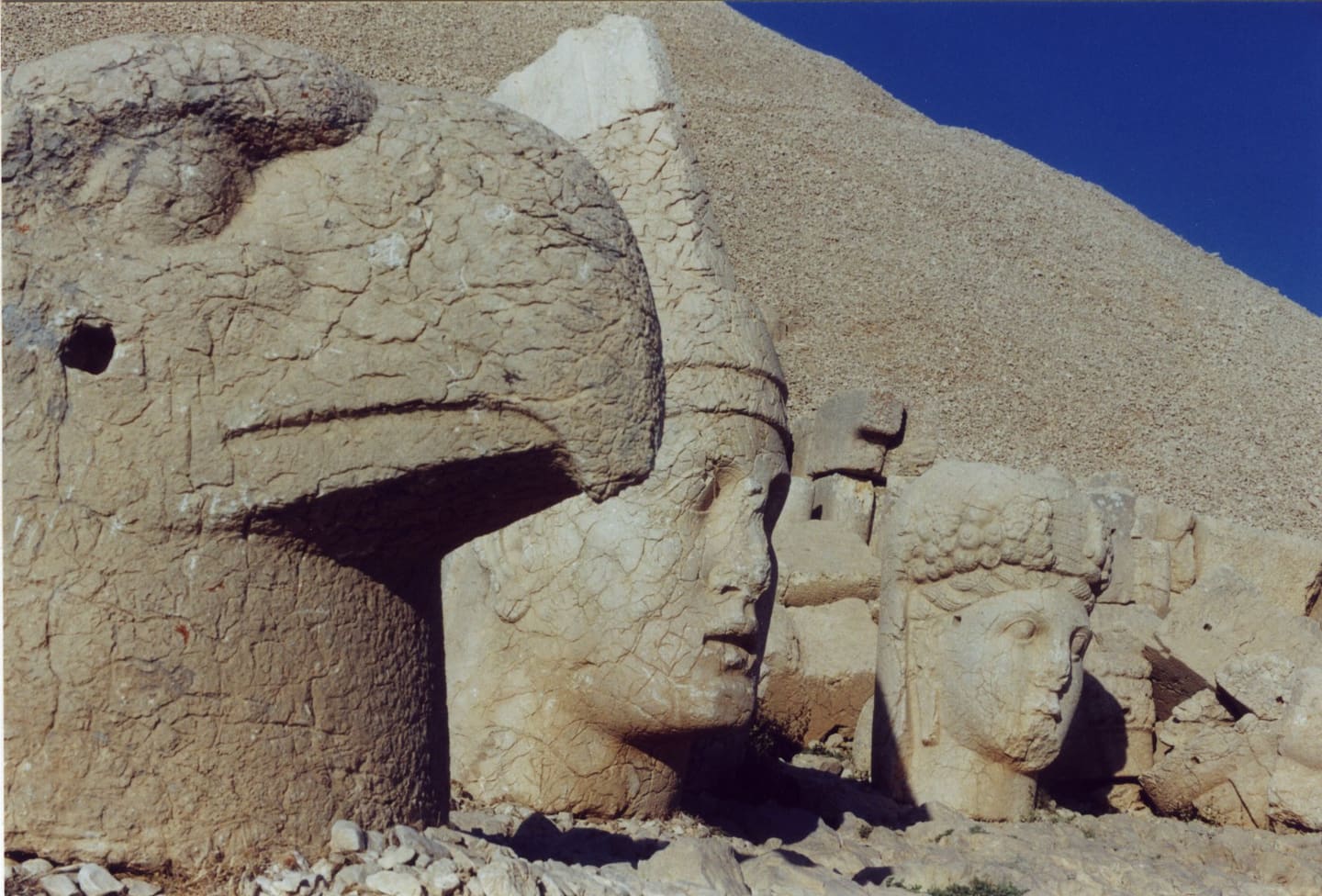
Photo: Ernesto~itwiki · CC BY-SA 3.0 (opens in a new tab) · Wikimedia Commons (opens in a new tab)
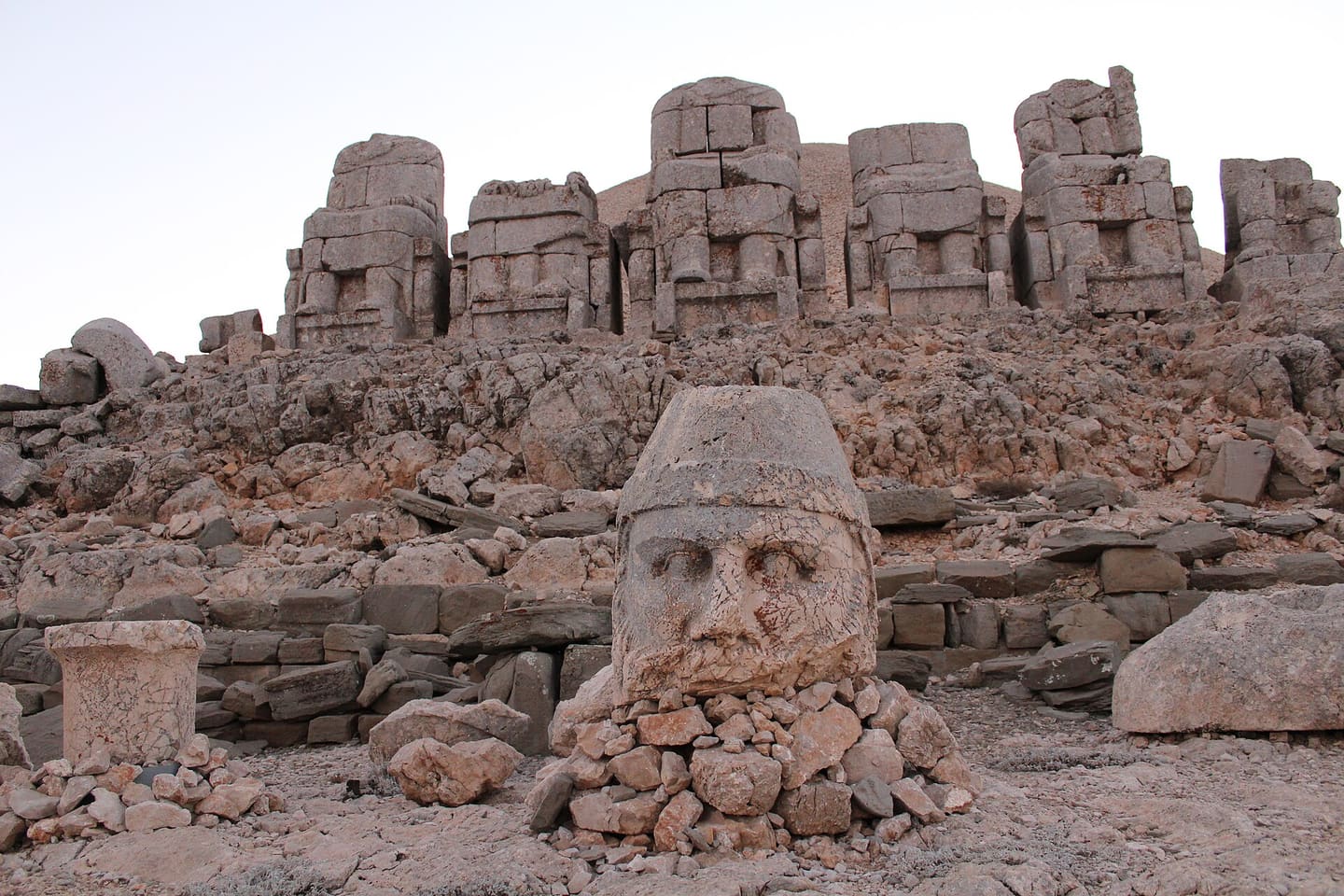
Photo: Nur Çağlar · CC BY-SA 4.0 (opens in a new tab) · Wikimedia Commons (opens in a new tab)
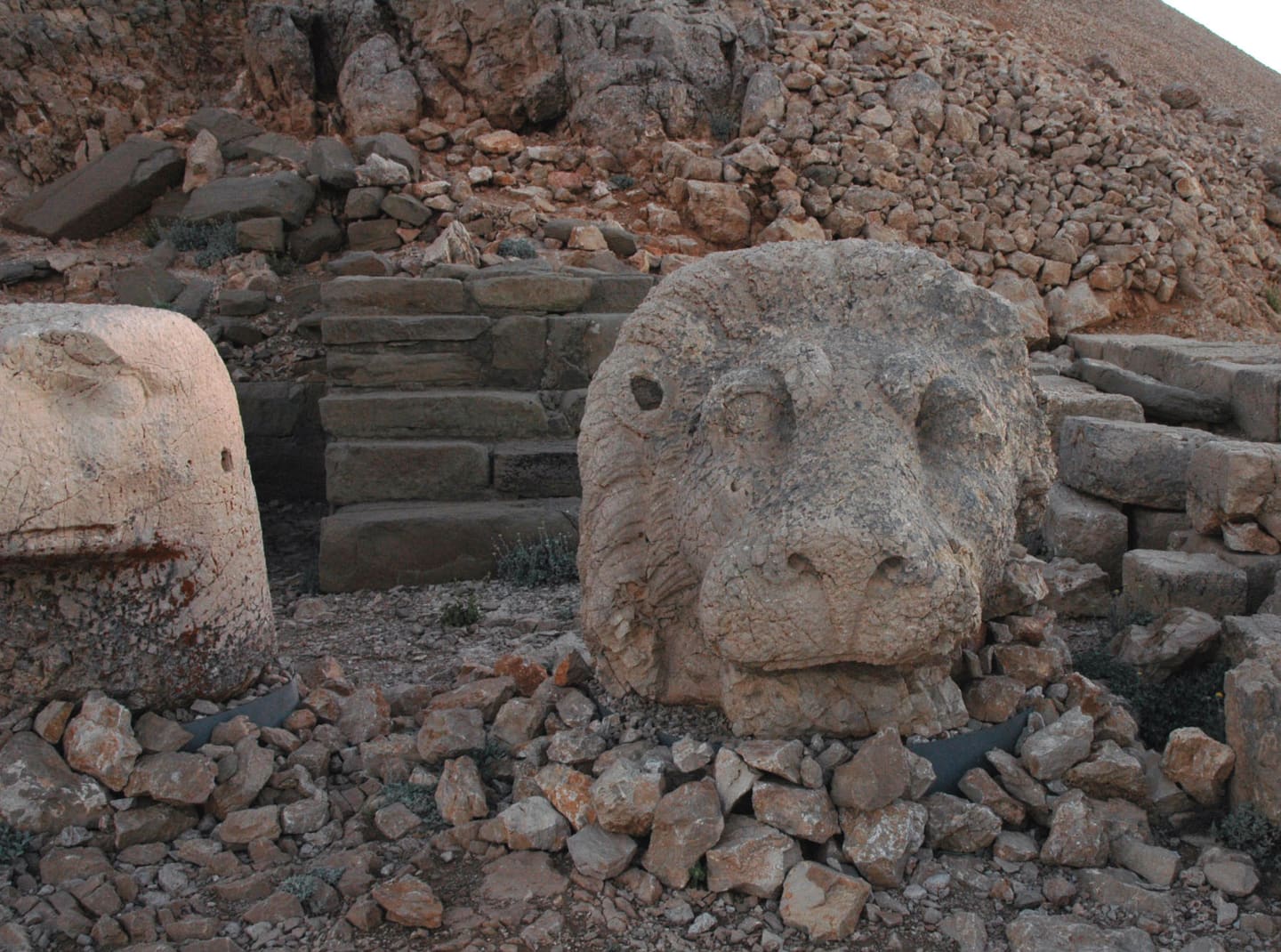
Photo: Կարեն Թոխաթյան · CC BY-SA 4.0 (opens in a new tab) · Wikimedia Commons (opens in a new tab)
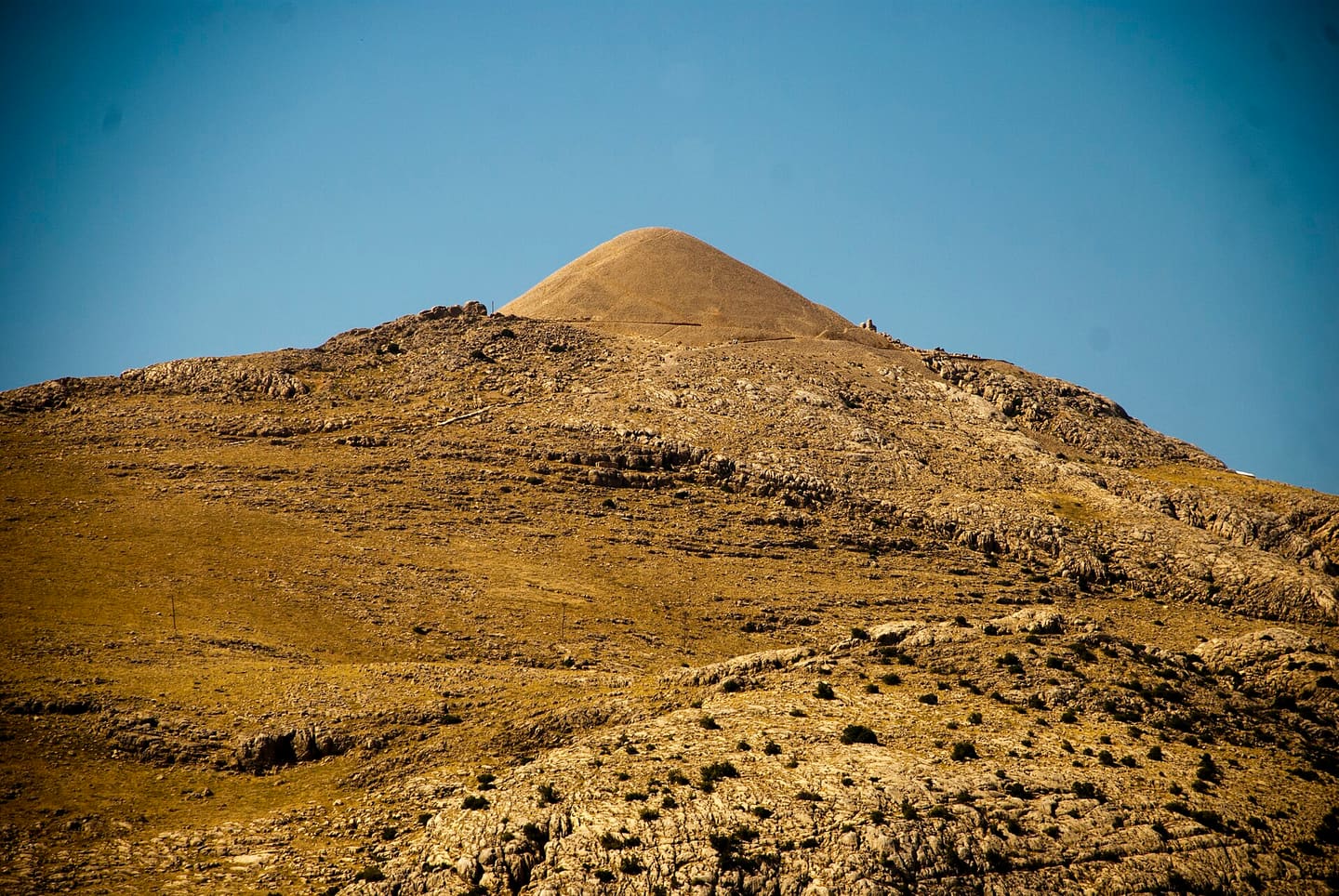
Photo: Acar54 · CC BY-SA 4.0 (opens in a new tab) · Wikimedia Commons (opens in a new tab)
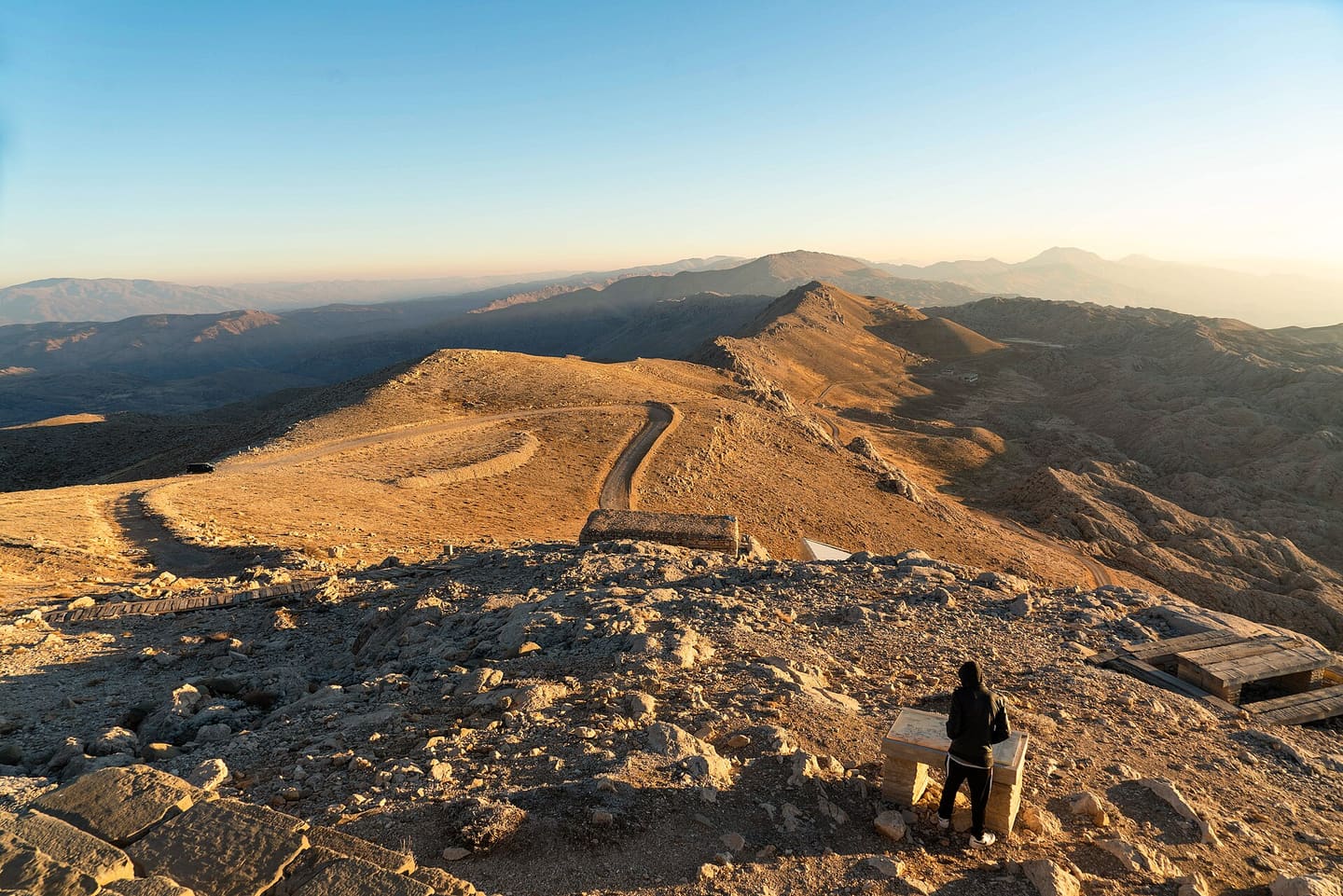
Photo: Liselottediehl · CC BY-SA 4.0 (opens in a new tab) · Wikimedia Commons (opens in a new tab)
Good to know
- Dress warmly, even in summer: the summit is cold at sunrise.
- The mountain road is usually open in the warm months only. Snow can close it in winter, so ask before you set out.
- The ministry says times at the site change with the hours of sunrise and sunset: see its page on muze.gov.tr.
From here
Kahta
24 km. Mount Nemrut at sunrise or sunset.
Arslantepe
About 56 km as the crow flies. A mound near Malatya with a palace complex of around 3000 BC, where the oldest known swords were found, together with thousands of clay sealings from its storerooms.
Where it began
5 days, 9 places, Gaziantep to Mardin.
Also nearby
- 18 kmKarakuş Tumulus
Tumulus, Commagene
- 26 kmArsameia
Royal sanctuary, Commagene
- museumAdıyaman Museum
Commagene finds
Location precise · Source (opens in a new tab)