Göbekli Tepe
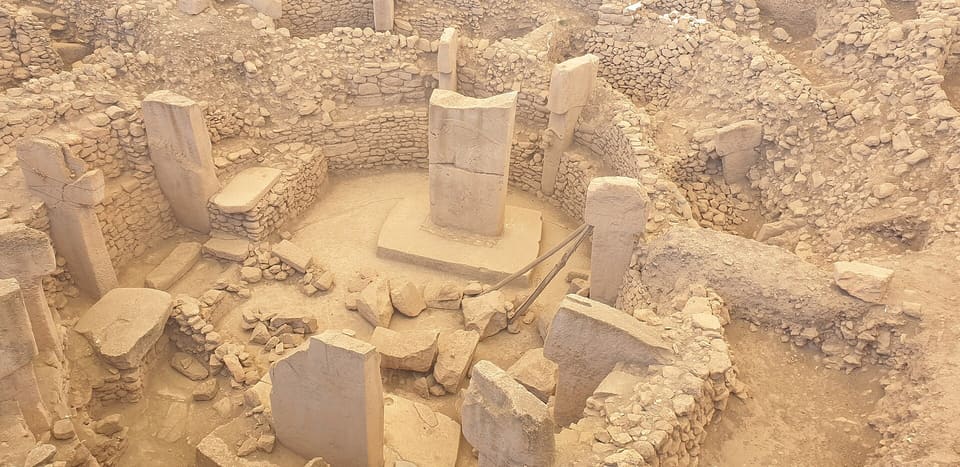
Round enclosures of carved T-shaped pillars, built from about 9600 BC by people who had not yet taken up farming. It changed what was thought about how civilisation began. World Heritage since 2018.
Plan your visit
For a first visit at an easy pace.
Opening hours and prices change: see muze.gov.tr (opens in a new tab).
Times are our estimates. Distances are straight lines.
Where it is and how to get there
On a hilltop in the Germuş mountains, about 14 km north-east of Şanlıurfa as the crow flies, near the village of Örencik. From the top you look out over the Harran plain.
The walk, with what you’re looking at
Paths and walkways, mostly level. Allow about two hours with the visitor centre.
- Visitor centre
An exhibition on the site and its finds. Shuttle buses take you up the hill from here.
- Under the roof
A walkway circles the four great enclosures, A to D, from above. Each is named after its animals: snakes in A, a fox in B, boars in C.
- Enclosure D
The best kept. Its two central pillars have arms, hands, belts and fox-pelt loincloths, and Pillar 43, the “Vulture Stone”, is in its wall.
- The later buildings
Smaller rectangular rooms with short pillars, built after the great enclosures.
- The quarry
On the limestone plateau above the hill, the outline of a pillar about 7 m long is still lying in the bedrock where it was cut.
Göbekli Tepe
Hunter-gatherers raised these pillars about 11,600 years ago, before farming, pottery or writing, and thousands of years before the first cities. The big T-shaped pillars are people: on some, carved arms bend round to hands that meet above a belt.
- c. 9600 BCThe first enclosures
People who still hunt and gather raise round and oval enclosures of T-shaped limestone pillars, the largest about 5.5 m tall, cut from the bedrock of the hill.
- c. 9600–8000 BCBuilding and rebuilding
The enclosures are rebuilt and changed over many generations. Later buildings are smaller and rectangular, with shorter pillars, and the old enclosures end up buried.
- c. 8000 BCLeft behind
The hill is abandoned. By then people in the region have begun to farm, and the earliest domesticated wheat has been traced to the Karacadağ mountains nearby.
- 1963Noticed and passed over
A survey by Istanbul University and the University of Chicago records the mound, but takes its broken slabs for the gravestones of a medieval cemetery.
- 1994–1995Recognised
Klaus Schmidt of the German Archaeological Institute reads the old report, sees the slabs are Stone Age, and starts digging with the Şanlıurfa Museum.
- 2018–2019Opened to the world
Göbekli Tepe becomes a World Heritage Site in 2018. A roof goes up over the main enclosures and a visitor centre opens.
- 2021 → todayNot alone
The Taş Tepeler (“Stone Hills”) project digs a dozen sites of the same age around Şanlıurfa, among them Karahan Tepe.
Photographs
6 photographs from Wikimedia Commons, each with its author and licence.
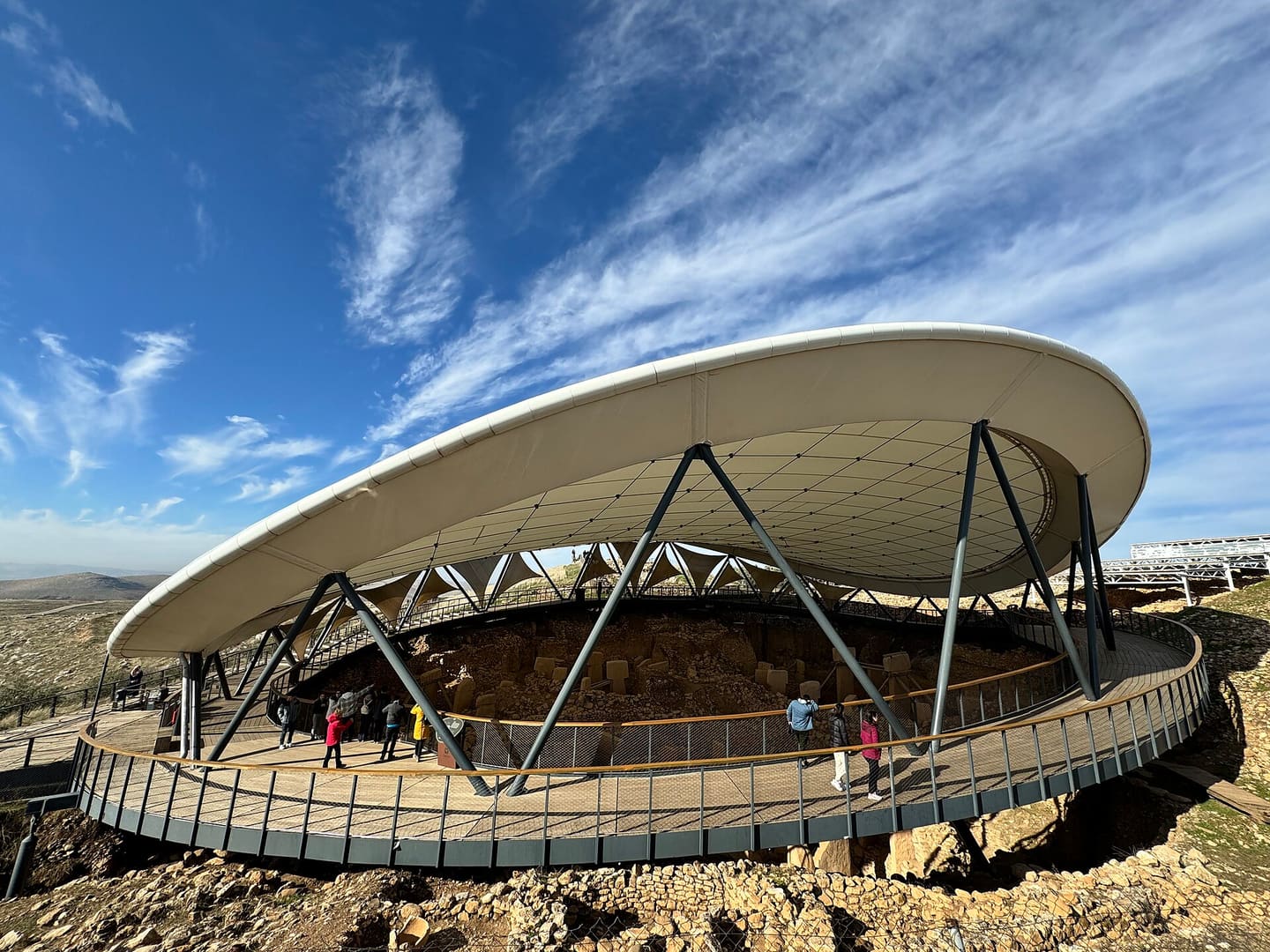
Photo: Bjelica · CC BY 4.0 (opens in a new tab) · Wikimedia Commons (opens in a new tab)
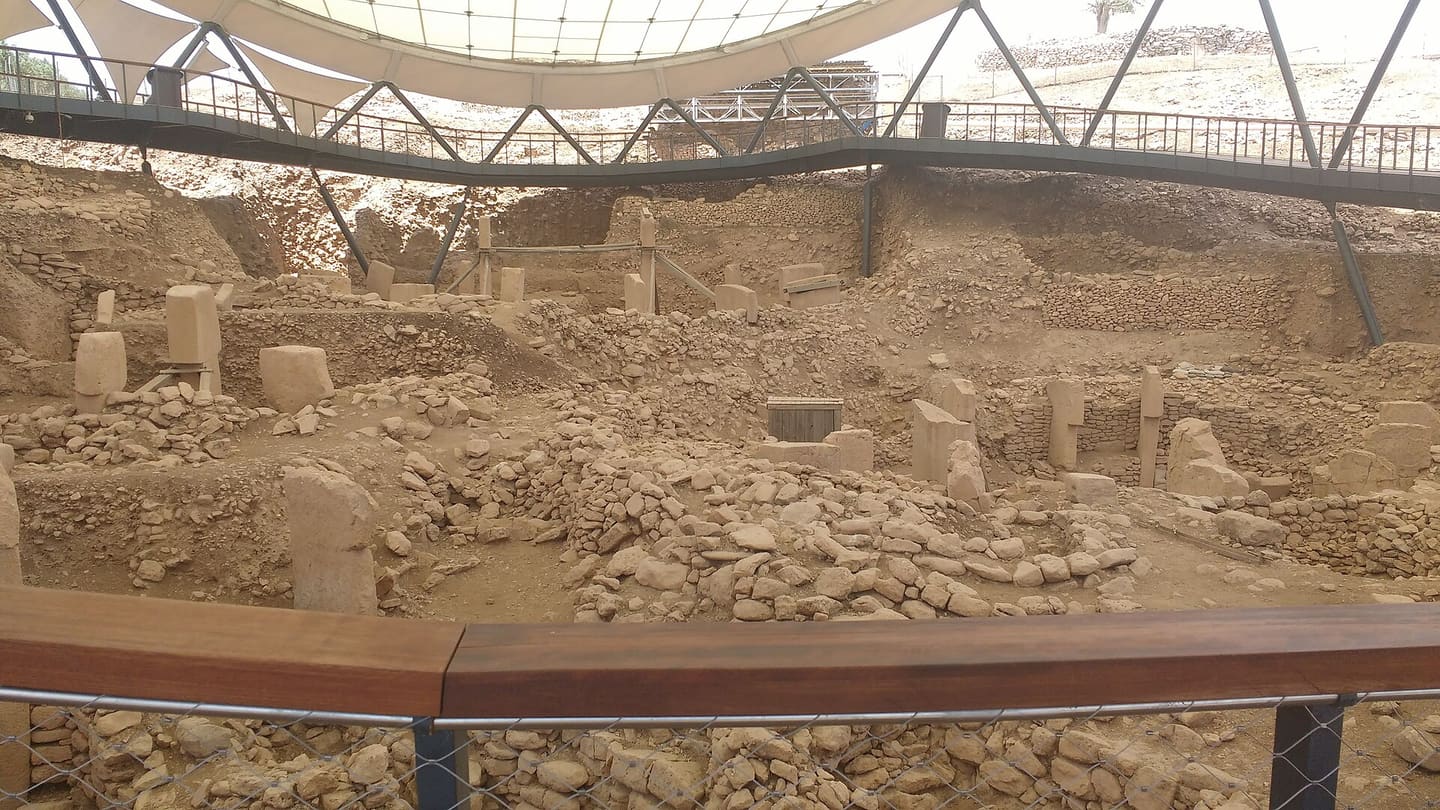
Photo: Immanuelle · CC BY-SA 4.0 (opens in a new tab) · Wikimedia Commons (opens in a new tab)
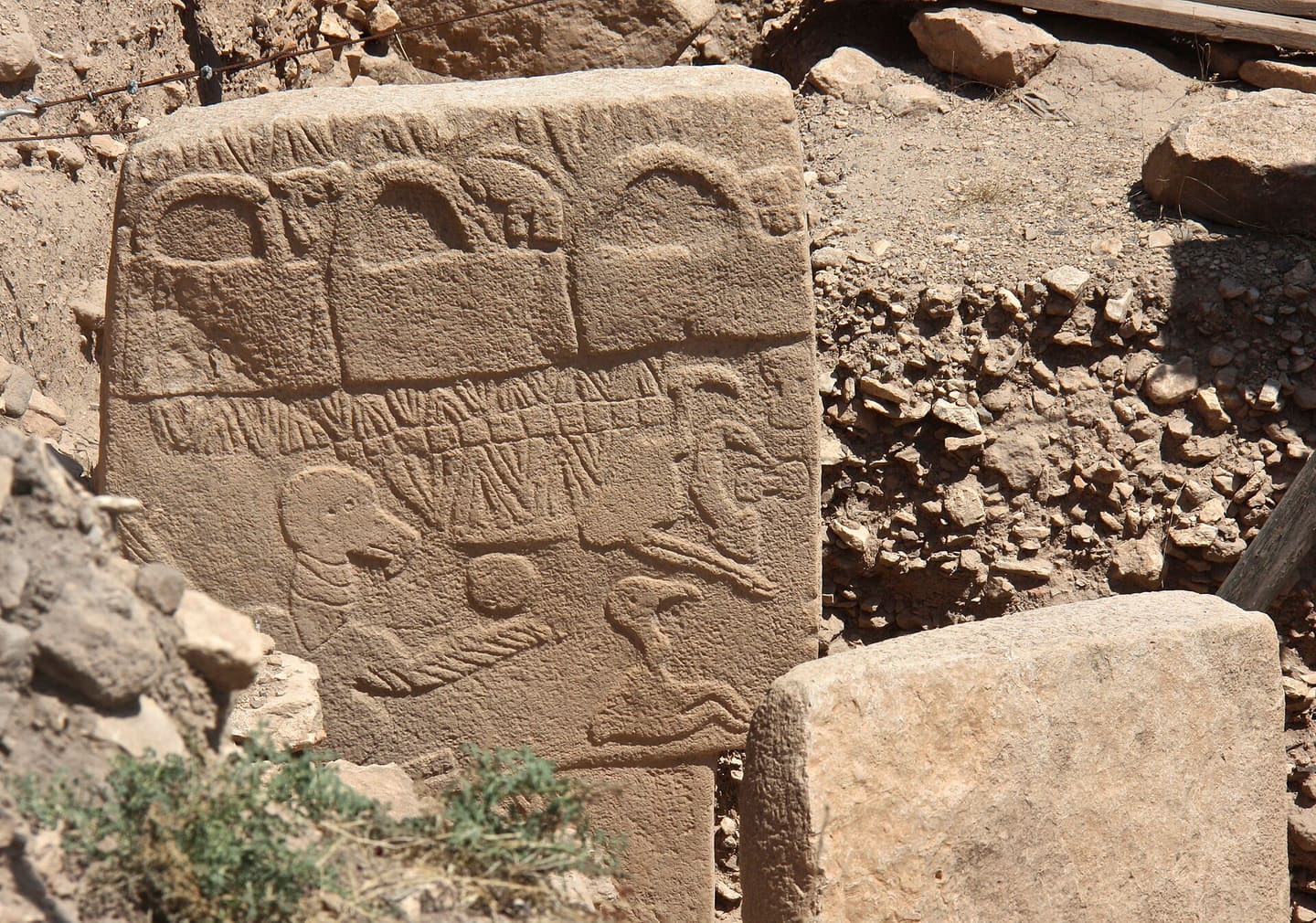
Pillar 43, the “Vulture Stone”, in Enclosure D.
Photo: Sue Fleckney · CC BY-SA 2.0 (opens in a new tab) · Wikimedia Commons (opens in a new tab)
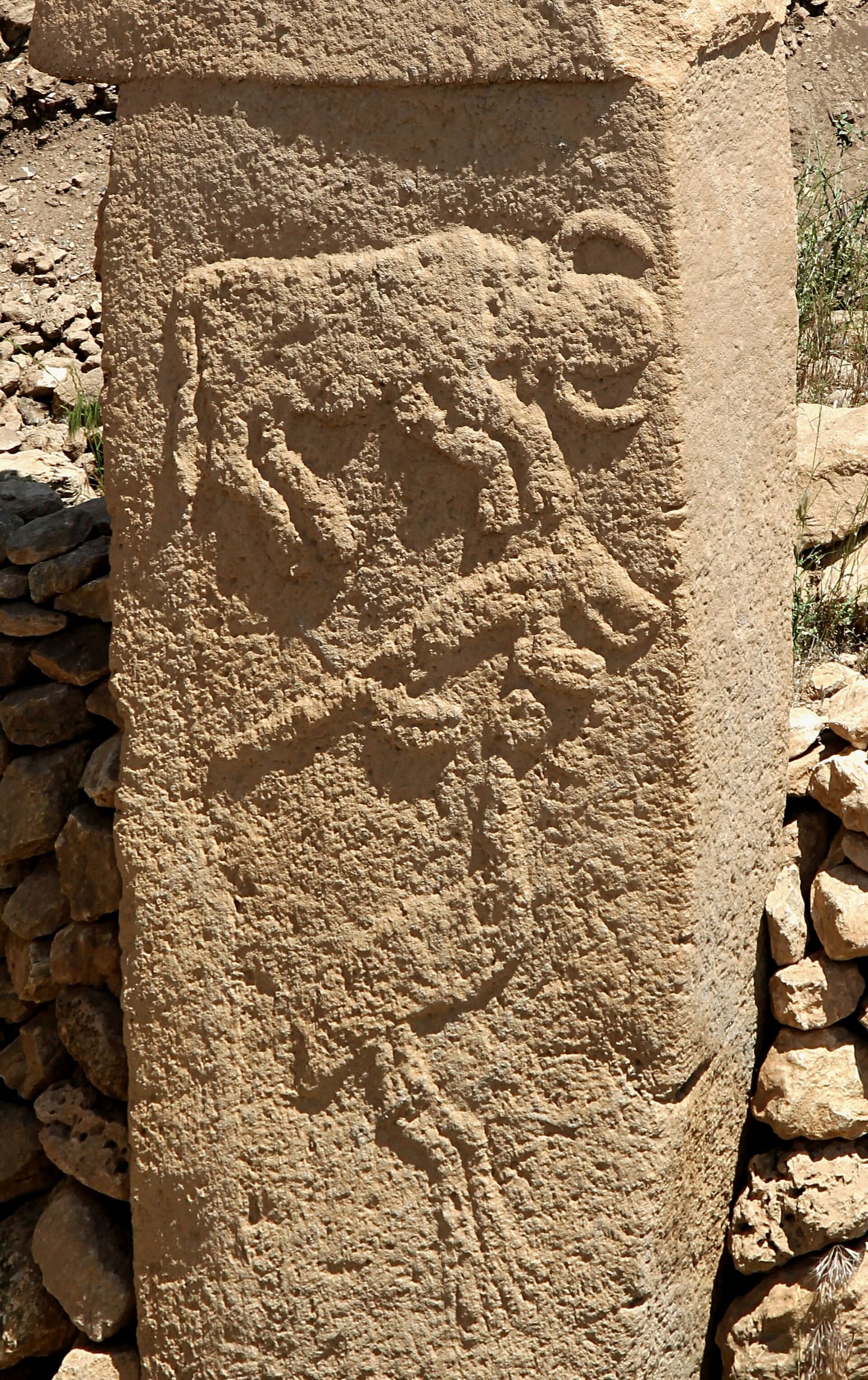
Photo: Klaus-Peter Simon · CC BY-SA 3.0 (opens in a new tab) · Wikimedia Commons (opens in a new tab)
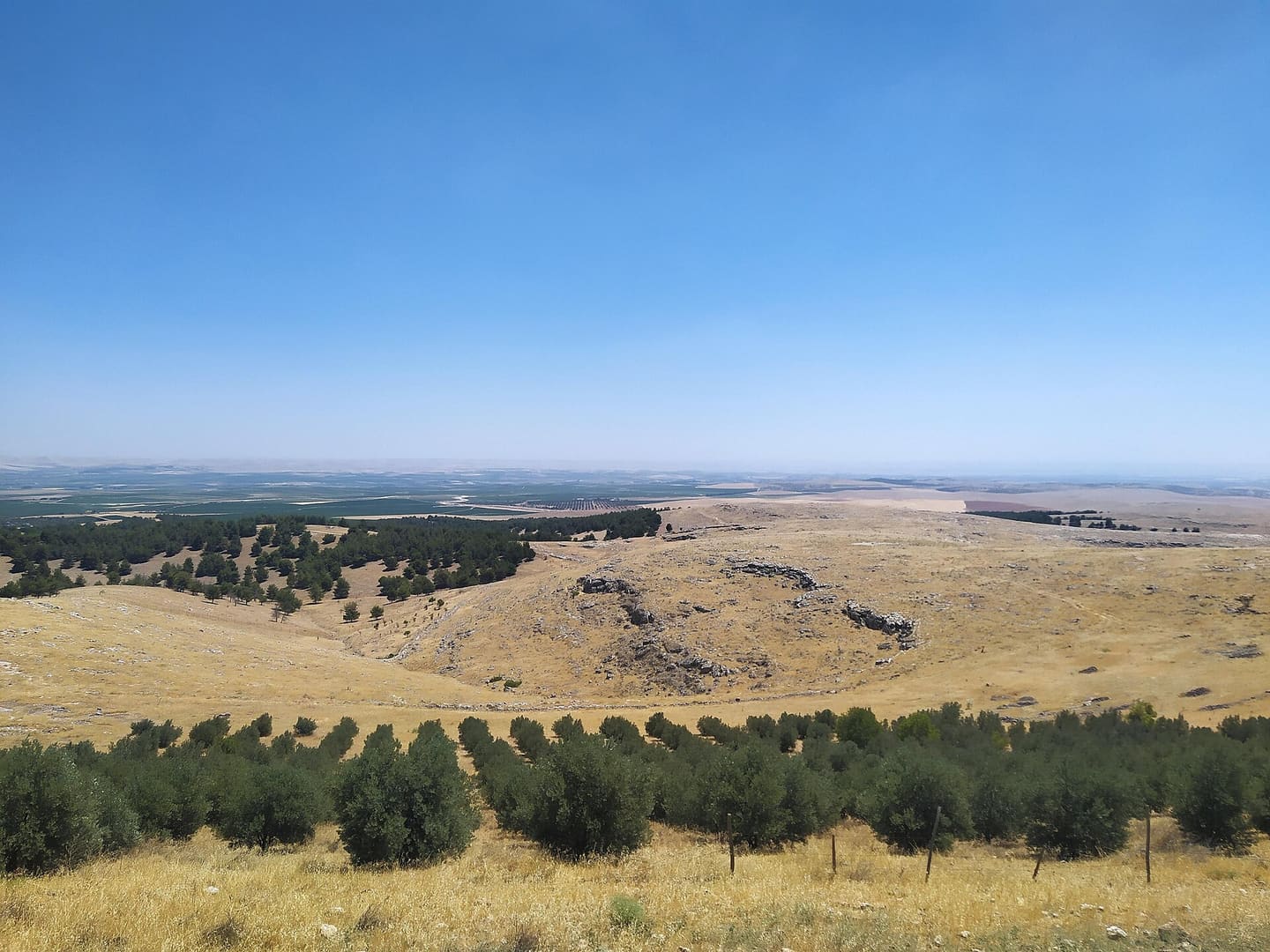
Photo: Radosław Botev · CC BY 3.0 pl (opens in a new tab) · Wikimedia Commons (opens in a new tab)
Good to know
- Summers in Şanlıurfa are very hot, often over 40 °C, and there is little shade on the hill. Spring and autumn are the best seasons; in summer come at opening time.
- Before or after, see the Şanlıurfa Archaeology Museum: it has Urfa Man, finds from the excavation and a full-size copy of Enclosure D you can walk into.
- Karahan Tepe, a site of the same age with a hall of pillars cut out of the rock, and the beehive houses of Harran are each an easy half-day from Şanlıurfa.
Where its treasures are now
Göbekli Tepe 'totem pole'
c. 9000–8000 BC. A 1.9 m pillar carved with stacked human and animal figures, found at Göbekli Tepe in 2010; a rare piece of the site's sculpture that can be seen up close.
Şanlıurfa Archaeology Museum, ŞanlıurfaKilisik sculpture
c. 9000–8000 BC. A T-shaped figure with a small figure carved on its front, found by a farmer in 1965; it ties the Göbekli Tepe pillars to human bodies.
Adıyaman Museum, AdıyamanOldest known monumental megalithic buildings. Göbekli Tepe enclosures and T-pillars, c. 9600–8200 BC. Qualified How sure we are →
From here
Şanlıurfa
14 km. Göbekli Tepe, Karahan Tepe and the beehive houses of Harran.
Karahan Tepe
About 37 km as the crow flies. Göbekli Tepe’s neighbour and contemporary, with a chamber of pillars cut out of the bedrock and a carved human head looking out from the wall.
Where it began
5 days, 9 places, Gaziantep to Mardin.
Also nearby
- 15 kmEdessa (Şanlıurfa)
City, Hellenistic–Islamic
- 37 kmKarahan Tepe
Neolithic sanctuary, Pre-Pottery Neolithic
- museumHaleplibahçe Mosaic Museum
Amazon queens mosaic
- museumŞanlıurfa Archaeology Museum
Urfa Man, Neolithic finds
Location precise · Source (opens in a new tab)