Hattusa (Hattuşa)
Capital of the Hittite empire in the second millennium BC, its walls running for kilometres over the hills, with the Lion Gate and the Sphinx Gate. Its clay-tablet archive gave the world the Kadesh peace treaty. World Heritage since 1986.
Plan your visit
For a first visit at an easy pace.
Opening hours and prices change: see muze.gov.tr (opens in a new tab).
Times are our estimates. Distances are straight lines.
Where it is and how to get there
In central Anatolia, in Çorum province, beside the village of Boğazkale (once called Boğazköy), south-west of the town of Çorum. The ruins cover a wide area of hills and rocky ridges.
The walk, with what you’re looking at
A big site on steep ground: the city wall ran for about 6 km. These are the main stops, in a suggested order, and the rock sanctuary of Yazılıkaya is a separate stop a short way to the north-east.
- The rebuilt wall
Near the entrance, part of the city wall has been rebuilt with its towers, to show what the Hittite wall looked like.
- The Great Temple
The city’s biggest temple, in the lower city. Its plan, a courtyard ringed by rooms, can still be read from the foundations.
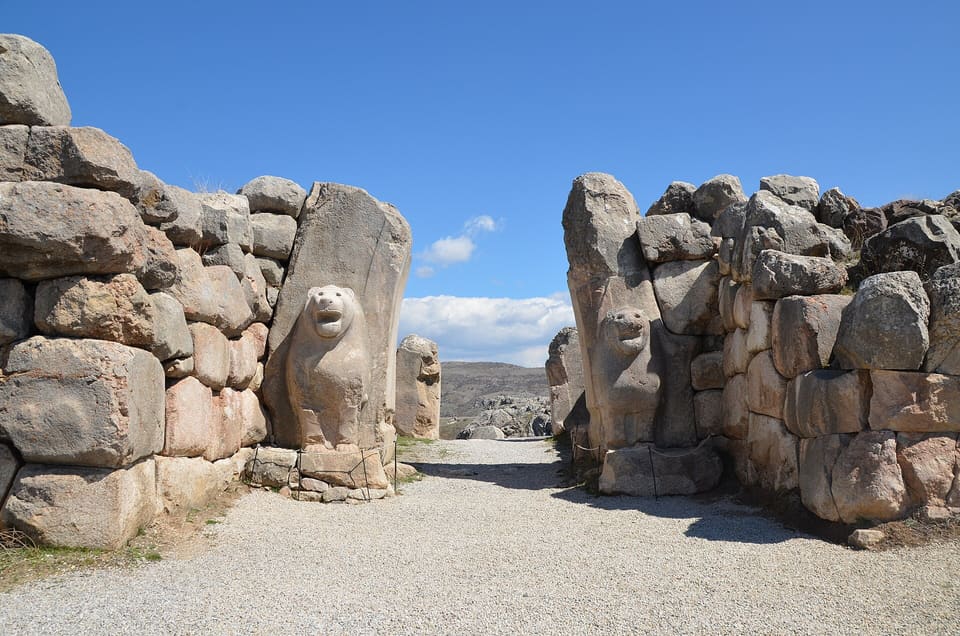
- The Lion Gate
One of the gates in the city wall, guarded by a pair of carved stone lions.
- The King’s Gate
Another of the great gates, decorated with a relief of a warrior.
- Yerkapı and the Sphinx Gate
At the southern end of the wall, the highest point of the city, stands the Yerkapı rampart with the Sphinx Gate above it. A tunnel runs under the rampart.
- The southern temples
On rising ground in the southern part of the city, a district of more temples and holy places.
- The Hieroglyphic Chamber
A chamber with a hieroglyphic inscription, set up by Suppiluliuma II, the last Hittite king we know of, to tell of his deeds.
- Büyükkale
The royal citadel on a high rock ridge: the palace and the offices of the state. Only the foundations survive.
- Yazılıkaya
Outside the walls, a short way to the north-east: an open-air rock sanctuary with carvings of Hittite gods. It has its own page on this site.
Hattusa (Hattuşa)
A capital on a rocky hillside. The Hittite kings ruled from here for centuries, behind walls about 6 km long, until the empire fell around 1190 BC.
- Late 3rd millennium BCHattush
A small settlement of the Hattians grows on the rocky slopes. Its name, Hattush, will give the city its name.
- 19th–18th centuries BCAssyrian merchants
Traders from Assyria set up a quarter in the lower city. The name of the city first shows up in written records from this time.
- About 1700 BCBurned by Anitta
King Anitta of Kussara burns the city down. It is settled again soon after.
- 1600s BCThe Hittite capital
King Hattusili I, who came from Kussara like Anitta, makes Hattusa the capital of the Hittite state.
- About 1344–1322 BCThe great wall
The wall round the city is built in the reign of Suppiluliuma I.
- 13th century BCBack to Hattusa
After years when the court sat elsewhere, King Mursili III brings it back to Hattusa, and it stays the capital until the empire ends.
- About 1190 BCThe end
The Hittite state falls. Hattusa is abandoned and for centuries is not a city again.
- 1834Found again
Charles Texier, a French explorer, comes upon the ruins near the village of Boğazköy.
- 1906The tablets
German excavations begin under Hugo Winckler. Thousands of clay tablets in cuneiform, the archive of the kings, are found, and they show that this was Hattusa.
- 1986World Heritage
Hattusa is put on the UNESCO World Heritage List.
- TodayStill being dug
Excavation and restoration go on.
Photographs
6 photographs from Wikimedia Commons, each with its author and licence.
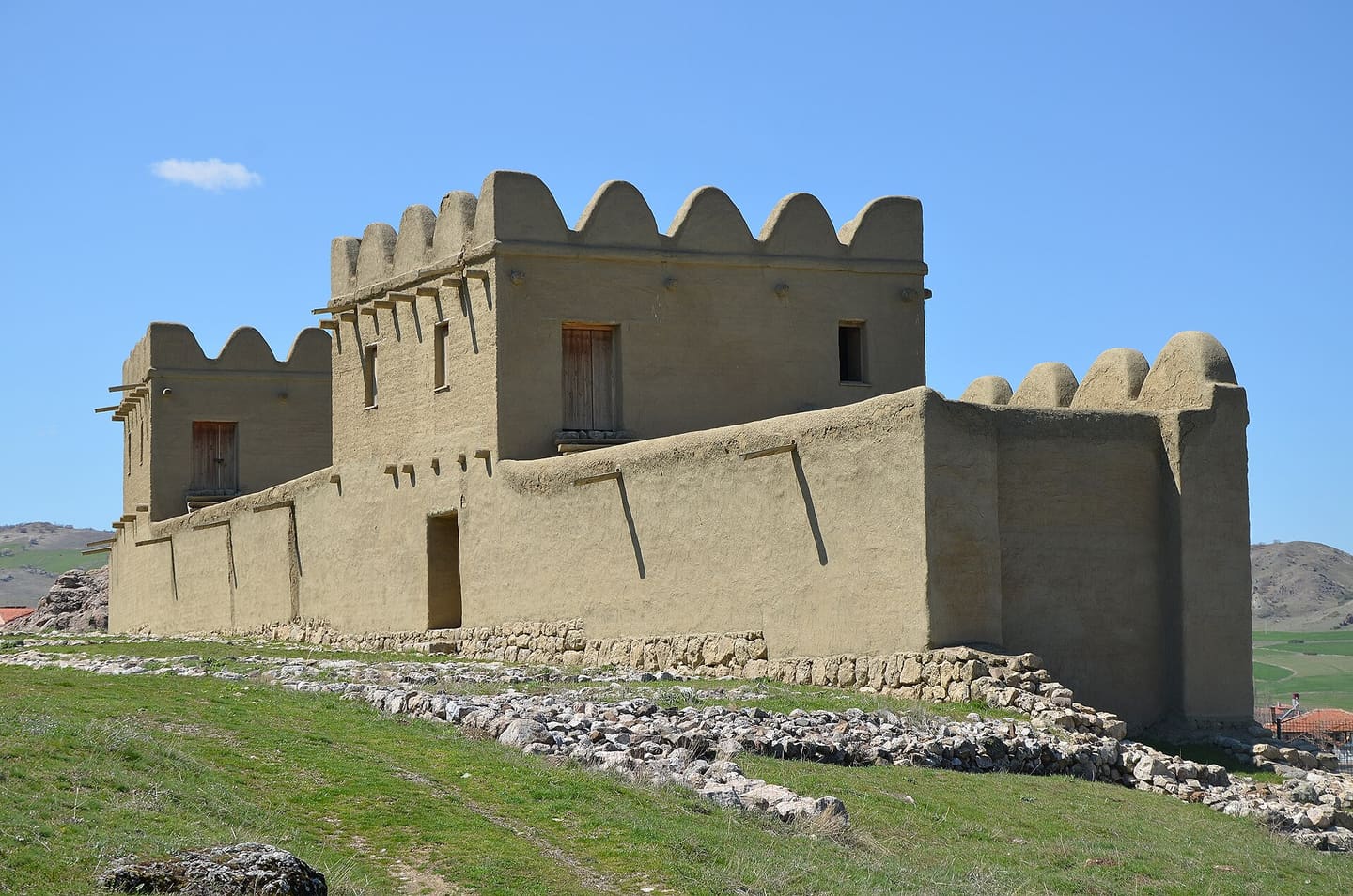
Photo: Carole Raddato from FRANKFURT, Germany · CC BY-SA 2.0 (opens in a new tab) · Wikimedia Commons (opens in a new tab)
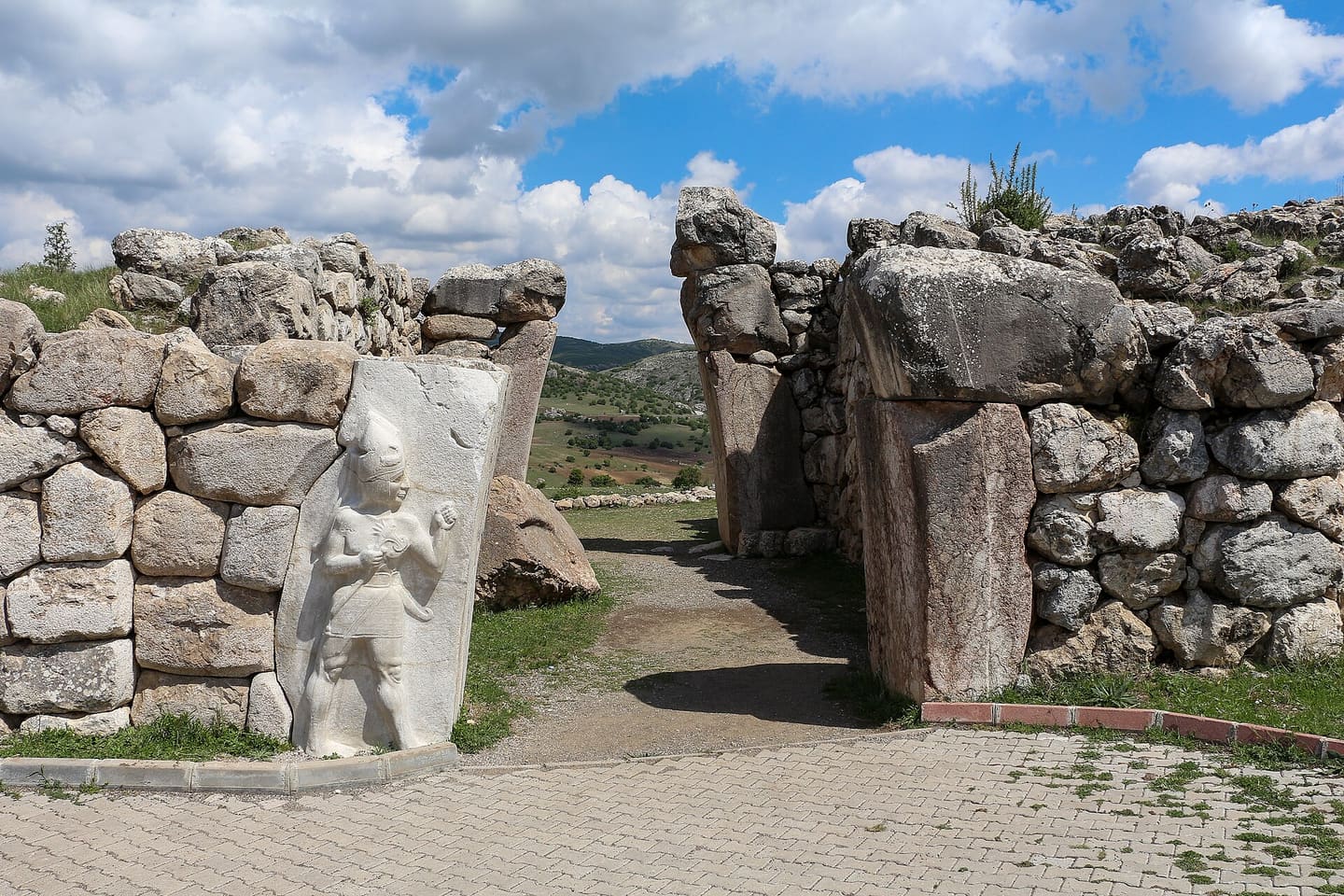
Photo: Bernard Gagnon · CC BY-SA 3.0 (opens in a new tab) · Wikimedia Commons (opens in a new tab)
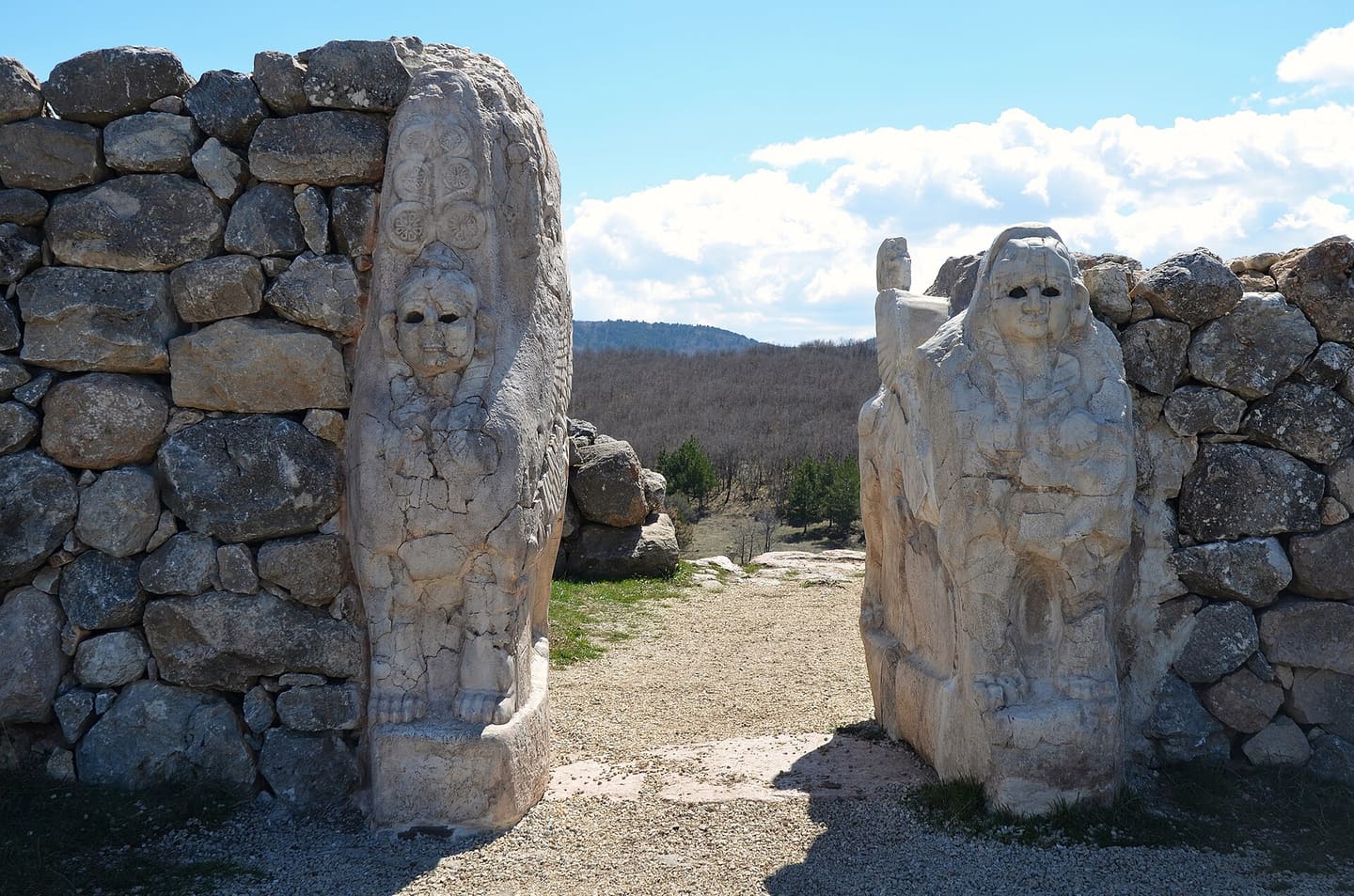
Photo: Carole Raddato from FRANKFURT, Germany · CC BY-SA 2.0 (opens in a new tab) · Wikimedia Commons (opens in a new tab)
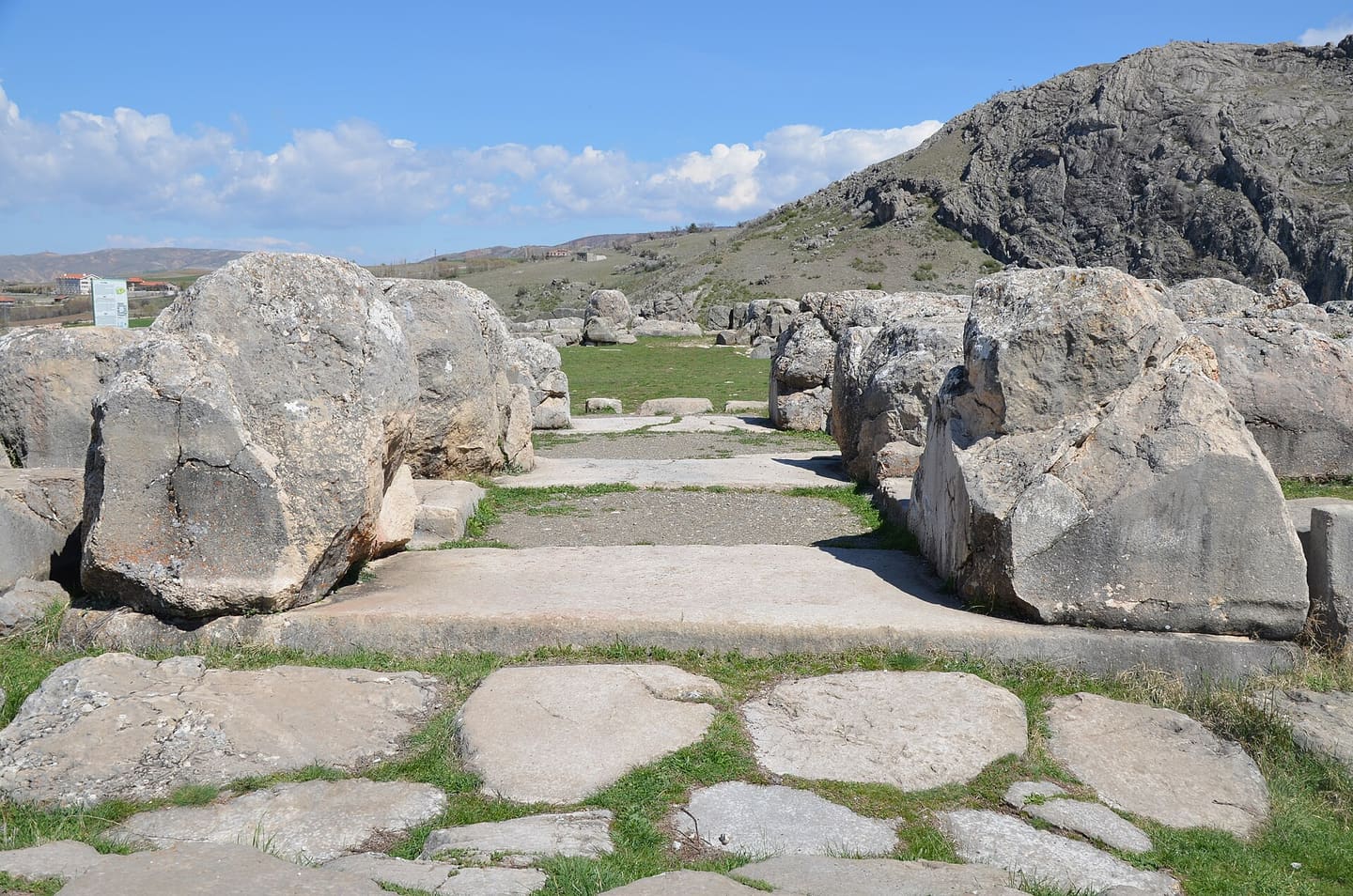
Photo: Carole Raddato from FRANKFURT, Germany · CC BY-SA 2.0 (opens in a new tab) · Wikimedia Commons (opens in a new tab)
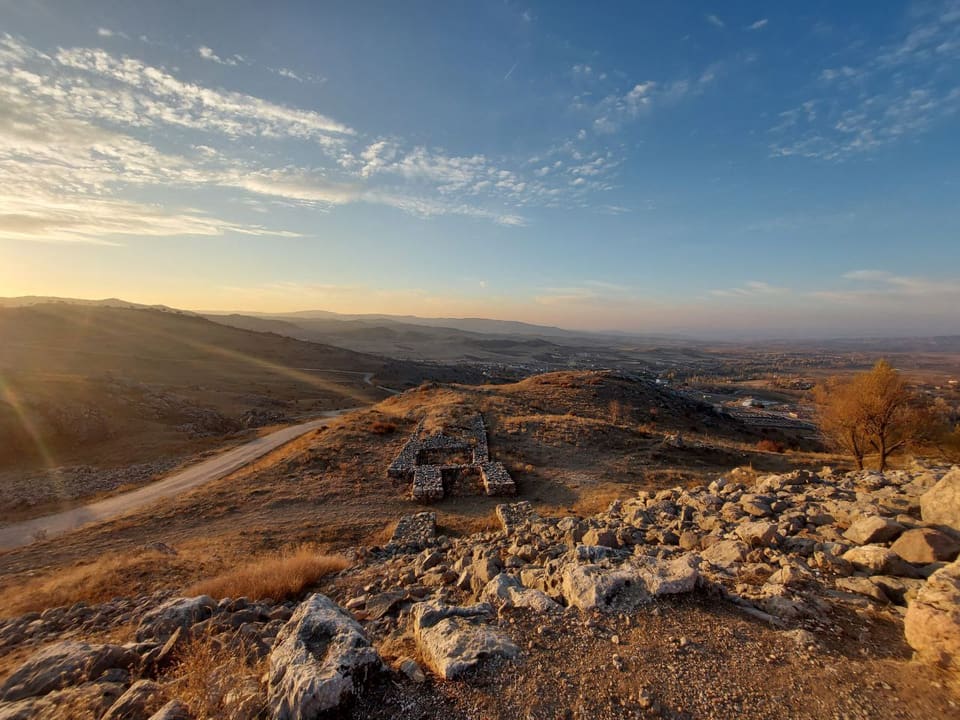
Photo: Alena Belova for Exhibo · CC BY-SA 4.0 (opens in a new tab) · Wikimedia Commons (opens in a new tab)
Good to know
- Allow half a day: the site is large and the ground rises and falls.
- Most finds from Hattusa are in the Museum of Anatolian Civilizations in Ankara. The Boğazköy Museum in the village, on the ministry’s list of nearby sites, shows some of what stayed.
- Alacahöyük, the other Hittite site of the area, is also on the ministry’s list of nearby sites and has its own page on this site.
- Hours and tickets change: see the ministry’s page on muze.gov.tr.
Where its treasures are now
Hurri and Şerri bull vessels
c. 1600 BC. A pair of almost 1 m tall bull-shaped libation vessels from Hattusa, representing the bulls of the storm god.
Museum of Anatolian Civilizations, AnkaraKadesh Treaty tablet
c. 1259 BC. Hittite copy of the peace treaty between Hattusili III and Ramesses II, found at Hattusa in 1906; the oldest surviving written peace treaty. A copy hangs at the UN in New York.
Istanbul Archaeology Museums (Museum of the Ancient Orient), IstanbulHattusa Bronze Tablet (treaty with Tarhuntassa)
c. 1235 BC. The only Hittite bronze tablet found, unearthed near the Sphinx Gate at Hattusa in 1986; it records Tudhaliya IV's treaty with his cousin Kurunta.
Museum of Anatolian Civilizations, AnkaraSword of Tudhaliya
c. 1400 BC. A Mycenaean-type sword found at Boğazkale in 1991, inscribed that Tudhaliya dedicated it to the storm god after crushing Assuwa; physical evidence of Hittite wars in the Aegean.
Çorum Museum, ÇorumKing's Gate warrior god relief
14th–13th century BC. The original relief from the inner face of Hattusa's King's Gate (a copy stands at the site); the best-known image of a Hittite warrior.
Museum of Anatolian Civilizations, AnkaraHattusa Sphinx Gate sphinx
13th century BC. One of the two sphinxes from the Yerkapı gate at Hattusa; the one taken to Berlin was returned in 2011 and reunited with its pair, which came from Istanbul.
Boğazköy Museum, Çorum (Boğazkale)Hittite cuneiform tablet archive (Boğazköy tablets)
c. 1650–1180 BC. Around 30,000 tablets and fragments from Hattusa, the source of nearly everything known about Hittite language, law and religion; UNESCO Memory of the World since 2001.
Museum of Anatolian Civilizations and Istanbul Archaeology Museums, Ankara / IstanbulSphinx of Hattusa (Boğazköy Sphinx)
Returned 2011
Returned from the Pergamonmuseum, Boğazköy (Çorum)Boğazköy cuneiform tablets (thousands)
Many returned by the GDR in 1987 (from memory, not checked against a primary source)
Returned from Berlin, AnkaraOldest recorded Indo-European language. Hittite tablet archive of Hattusa (Boğazköy tablets), c. 1650–1180 BC. Confirmed How sure we are →
Oldest horse-training manual. Kikkuli text (chariot horse conditioning), c. 1345 BC. Qualified How sure we are →
Oldest surviving peace treaty between two great powers, with both versions kept. Kadesh treaty tablet (Hattusili III and Ramesses II), c. 1259 BC. Qualified How sure we are →
From here
Boğazkale
2 km. Hattusa, Yazılıkaya and Alacahöyük.
Yazılıkaya
About 2 km as the crow flies. The Hittites’ open-air rock sanctuary just outside Hattusa: a procession of gods and goddesses carved into two limestone chambers, and King Tudhaliya IV held in the arm of his god.
The Hittite heartland
3 days, 6 places, Ankara to Kayseri.
Also nearby
- 2 kmYazılıkaya
Rock sanctuary, Hittite
- 19 kmTavium
City, Galatian–Roman
- 25 kmAlacahöyük
Höyük / Hittite town, Early Bronze–Hittite
- museumAlacahöyük Museum
- museumBoğazköy Museum
Hattusa sphinxes, tablets
- museumÇorum Museum
Hittite finds
Location precise · Source (opens in a new tab)