Ephesus (Efes)
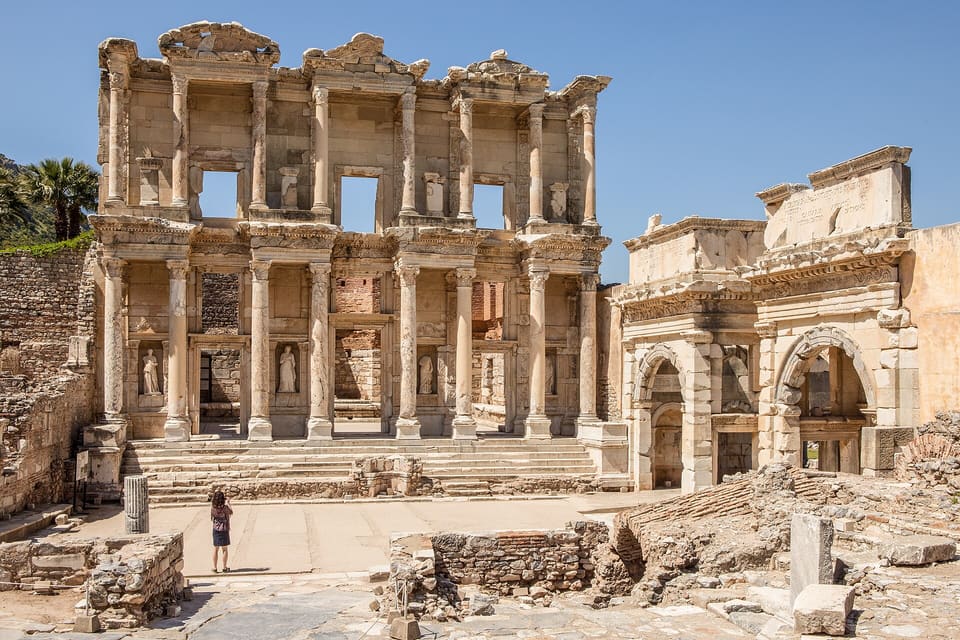
One of the great cities of Roman Asia: the Library of Celsus, a vast theatre and marble streets lined with terraced houses. The Temple of Artemis, one of the Seven Wonders, stood in the plain below. World Heritage since 2015.
Plan your visit
For a first visit at an easy pace.
Opening hours and prices change: see muze.gov.tr (opens in a new tab).
Times are our estimates. Distances are straight lines.
Where it is and how to get there
On the edge of Selçuk, in İzmir province, about 3 km south-west of the town centre and some 5 km inland from the Aegean. The ruins fill the valley between two hills, Panayır Dağı and Bülbül Dağı, with a gate at each end.
The walk, with what you’re looking at
About 2 km, all downhill if you start at the Upper Gate.
- Upper Gate
Start here and walk downhill.
- State Agora & Odeon
Where the city council met, in a small roofed theatre.
- Curetes Street
The marble high street, past the Temple of Hadrian and the public latrines.
- Terrace Houses
Under a roof: the painted rooms and mosaic floors of rich families. Separate ticket.
- Library of Celsus
Built by a son as a tomb and library for his father, governor of Asia.
- Great Theatre
About 25,000 seats. The silversmiths’ riot against Paul (Acts 19) happened here.
- Harbour Street
Once ran to the sea. The harbour silted up and the coast is now kilometres away.
Ephesus (Efes)
A city that kept moving. It followed its harbour as the river Küçük Menderes filled the bay with silt, and three different places have been called Ephesus.
- before 1000 BCApasa
Hittite letters name Apasa, capital of the kingdom of Arzawa. It is thought to have stood on Ayasuluk hill, in today’s Selçuk.
- c. 1000 BCIonian Greeks arrive
Greek settlers found a city by the sanctuary of a mother goddess they come to call Artemis.
- c. 550 BCA Wonder of the World
Croesus, king of Lydia, pays for columns of the new Temple of Artemis. It becomes one of the Seven Wonders.
- c. 290 BCThe city moves
Lysimachus, one of Alexander’s generals, moves the city into the valley between two hills. This is the Ephesus you walk through.
- 1st–2nd c. ADFirst city of Roman Asia
Ephesus is the seat of the Roman governor. Most of what stands today, the library, the terrace houses and the theatre in its final form, dates from these years.
- AD 431The Council of Ephesus
Bishops meet in the Church of Mary and declare her Theotokos, Mother of God.
- Middle AgesThe sea leaves
The harbour silts up. Life moves back to Ayasuluk hill, where the Basilica of St John and, later, the İsa Bey Mosque are built.
- 1869 → todayDug up again
John Turtle Wood finds the Temple of Artemis. Austrian excavations begin in 1895 and still continue. World Heritage since 2015.
Photographs
6 photographs from Wikimedia Commons, each with its author and licence.
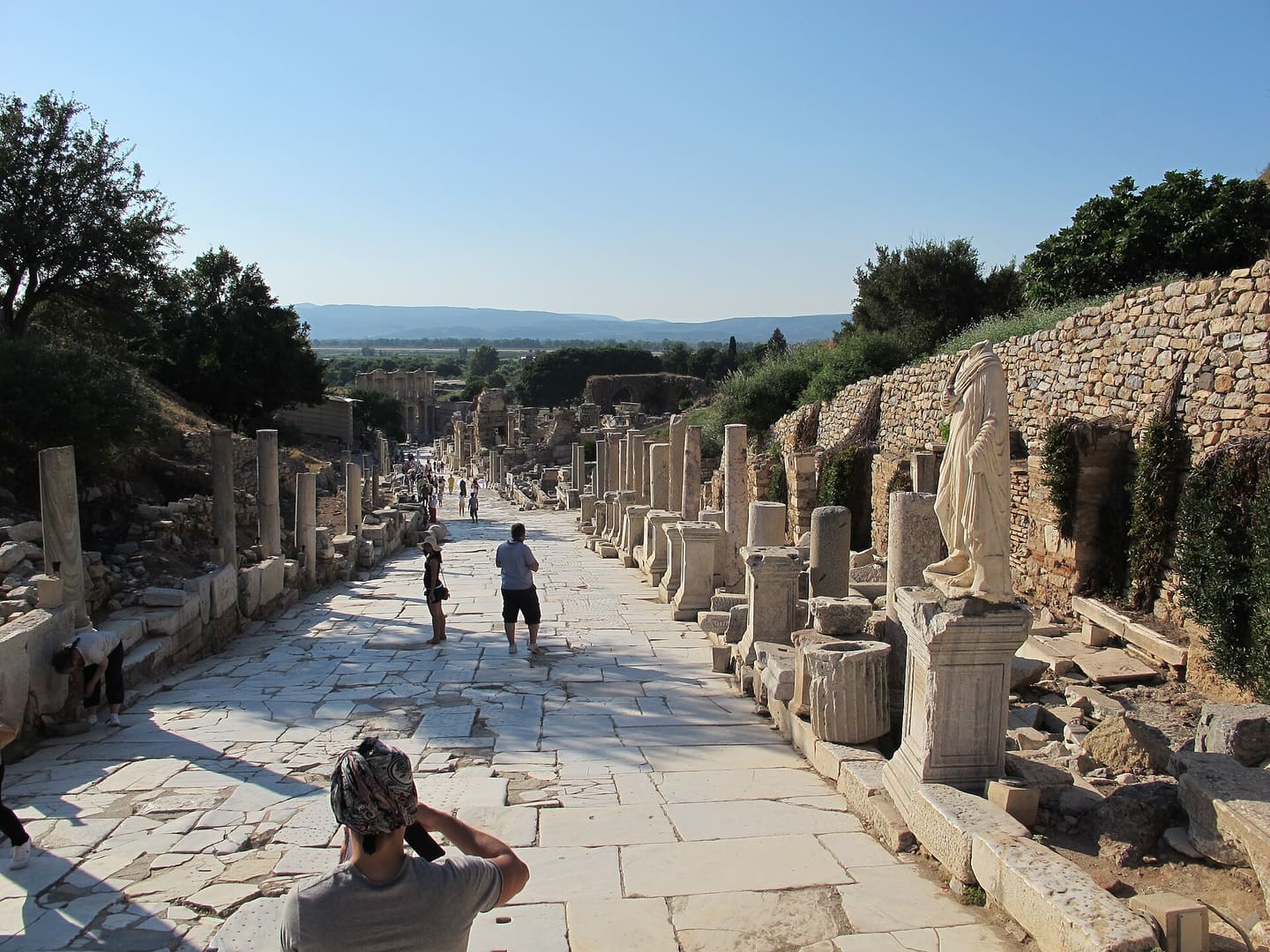
Photo: sailko · CC BY-SA 3.0 (opens in a new tab) · Wikimedia Commons (opens in a new tab)
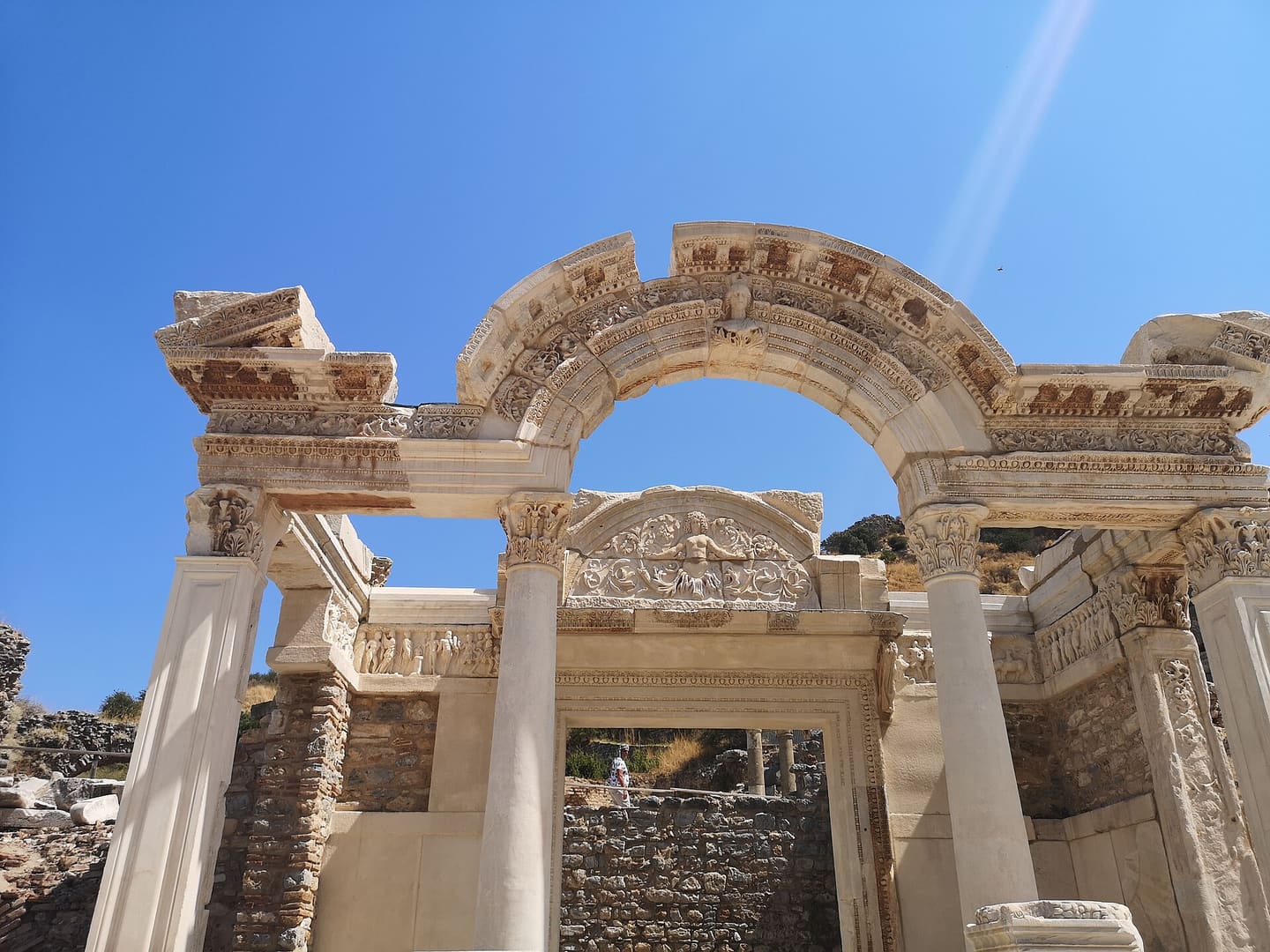
The Temple of Hadrian on Curetes Street.
Photo: Gargarapalvin · CC BY-SA 4.0 (opens in a new tab) · Wikimedia Commons (opens in a new tab)
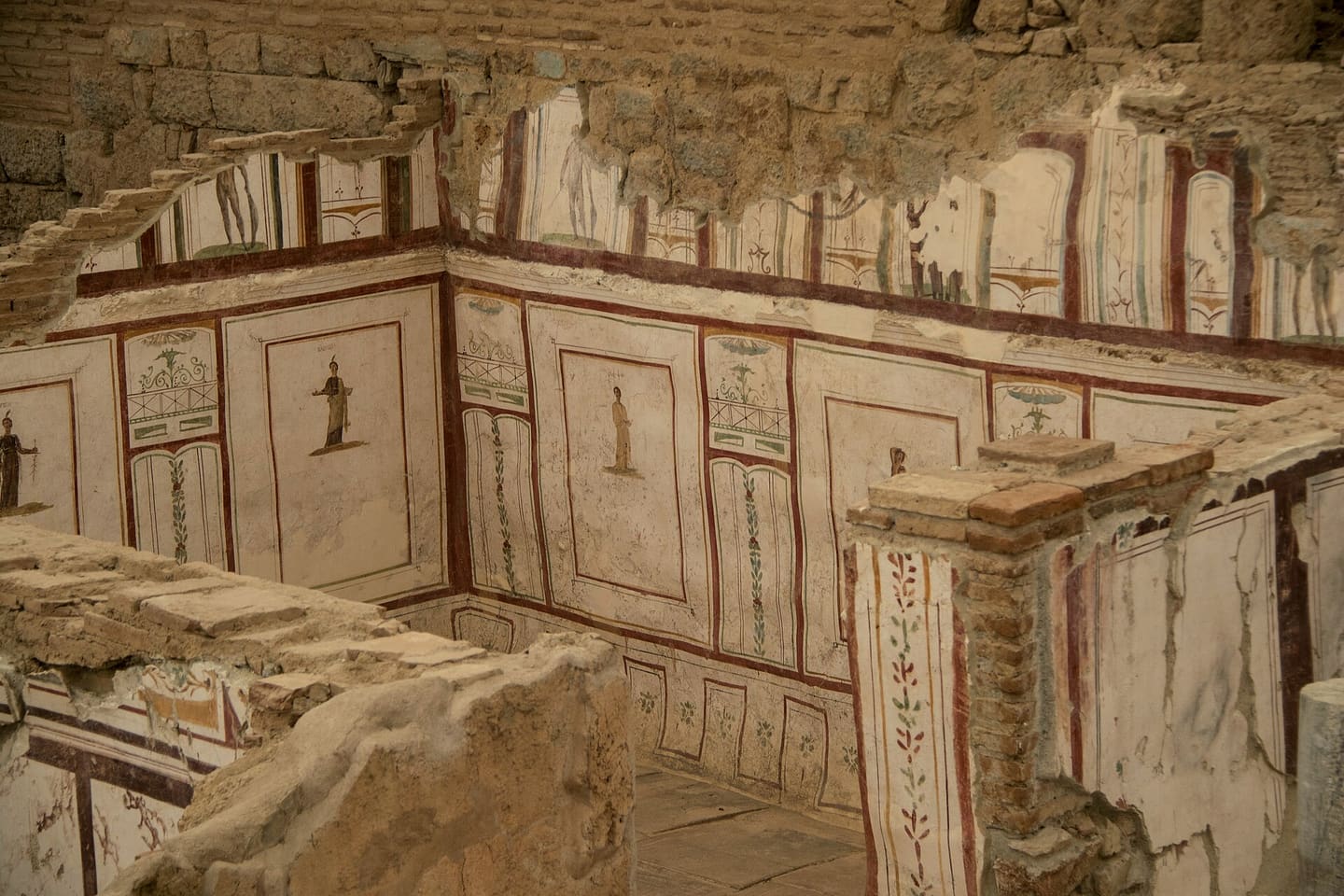
Wall paintings in the Terrace Houses, under their protective roof.
Photo: Marmaracalypso · CC BY-SA 4.0 (opens in a new tab) · Wikimedia Commons (opens in a new tab)
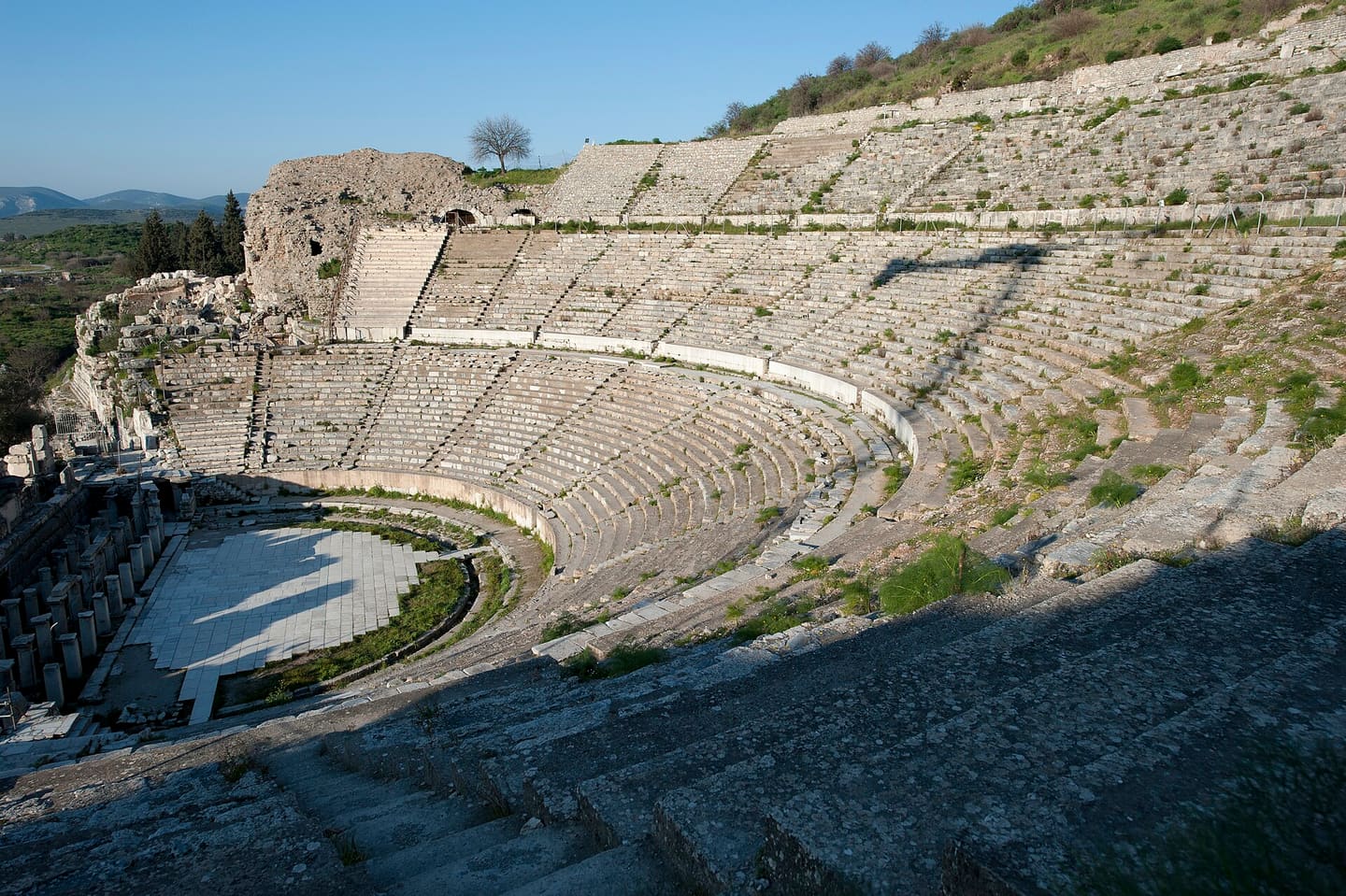
Photo: Dosseman · CC BY-SA 4.0 (opens in a new tab) · Wikimedia Commons (opens in a new tab)
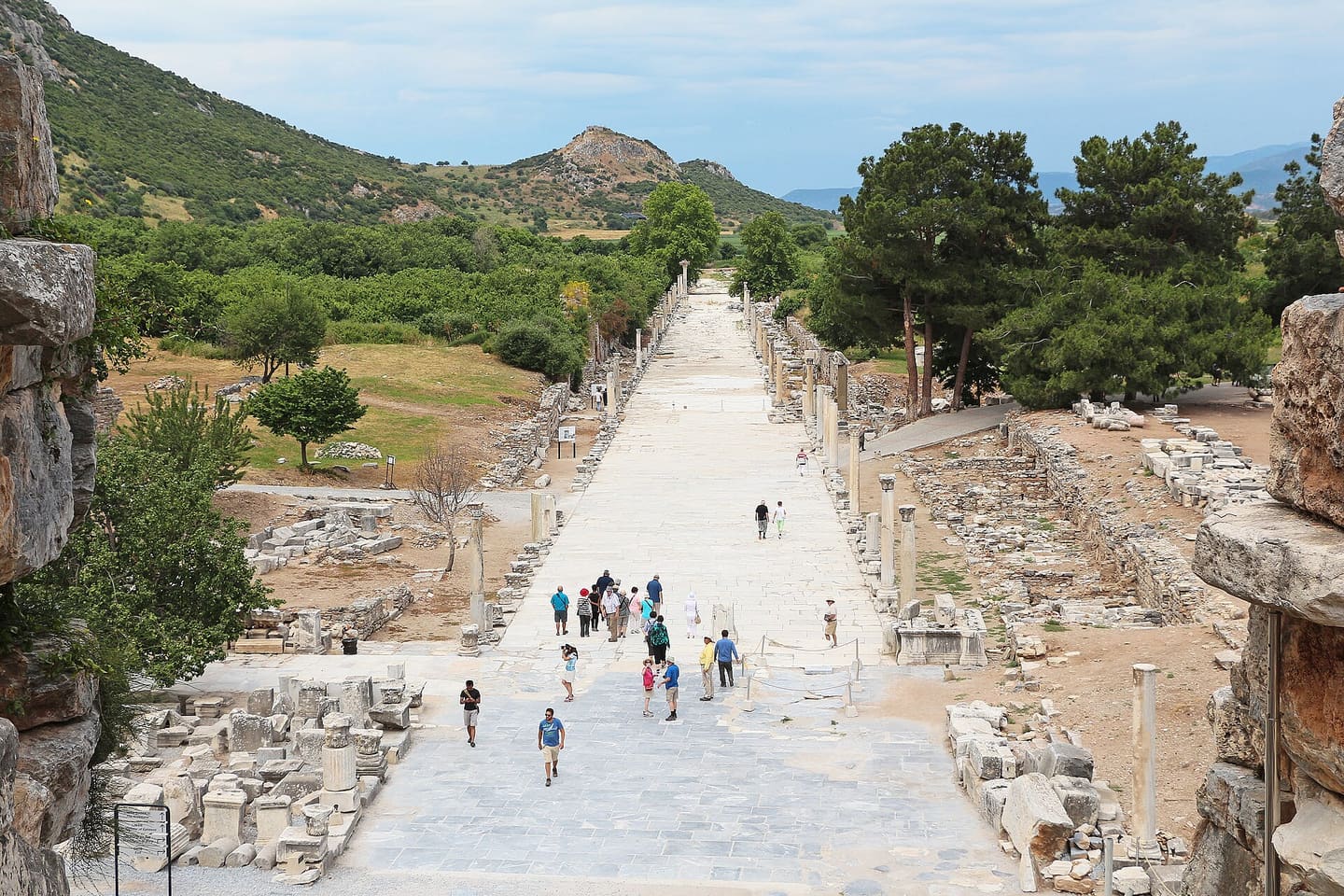
Harbour Street (the Arcadiane) seen from the theatre.
Photo: Bernard Gagnon · CC BY-SA 3.0 (opens in a new tab) · Wikimedia Commons (opens in a new tab)
Good to know
- Start at the upper (south) gate and walk downhill to the lower gate. A taxi from Selçuk to the upper gate is the usual way.
- Come at opening time. There is little shade, summer afternoons are very hot, and coach groups arrive mid-morning.
- The Terrace Houses, on Curetes Street, need a ticket of their own. They are under a roof, so they are also the coolest part of the visit.
- The marble paving is polished smooth: wear shoes with grip and bring water.
- Go to the Ephesus Museum in Selçuk as well: the statues of Artemis and the finds from the Terrace Houses are there, not on site.
Where its treasures are now
Statues of Artemis of Ephesus
1st–2nd century AD. The 'Great' and 'Beautiful' Artemis with their many-breasted (or egg- or gourd-hung) chests, found in the Prytaneion; icons of the cult of the Temple of Artemis.
Ephesus Museum, İzmir (Selçuk)Sculptured column drums of the Temple of Artemis
Held abroad; no return
British Museum, LondonParthian Monument reliefs (Great Antonine Altar) and Bronze Athlete (Apoxyomenos)
Held abroad. Ephesus has been a recurring point of friction; Austrian excavations were halted by Türkiye 2016–2018
Ephesos Museum (Kunsthistorisches Museum), ViennaFirst coins. Lydian and Ionian electrum coins (lion's head), c. 630–600 BC. Confirmed How sure we are →
Two of the Seven Wonders of the Ancient World. Temple of Artemis at Ephesus; Mausoleum of Halicarnassus, c. 550 BC and c. 350 BC. Confirmed How sure we are →
Also nearby
- 14 kmNotion
City, Ionian–Roman
- 15 kmClaros (Klaros)
Oracle sanctuary, Ionian–Roman
- 21 kmMetropolis (Ionia)
City, Hellenistic–Roman
- 31 kmPriene
City, Hellenistic
- museumBergama Museum
Pergamon finds
- museumEphesus Museum
Artemis statues
- museumTire Museum
- museumÇeşme Museum
Erythrai finds
Location precise · Source (opens in a new tab)