Troy (Truva)
Layer upon layer of cities, from about 3000 BC to Roman times, cut through by Heinrich Schliemann’s trench in the 1870s. A World Heritage Site since 1998; the Troy Museum by the site opened in 2018.
Plan your visit
For a first visit at an easy pace.
Opening hours and prices change: see muze.gov.tr (opens in a new tab).
Times are our estimates. Distances are straight lines.
Where it is and how to get there
In the north-west, in Çanakkale province, by the village of Tevfikiye, on a low mound called Hisarlık. It is 25 to 30 km south of the town of Çanakkale.
The walk, with what you’re looking at
The ruins are a low mound about 200 m across, with nine cities heaped inside it. The Troy Museum stands in the village, about 800 m east of the ruins, and belongs in the visit.
- The Troy Museum
A rust-coloured cube in the village. A ramp leads you down through the nine layers of Troy, and the displays then cover finds from Troy and from the Troad around it. See it before or after the ruins: it explains what the stones are.
- The wooden horse
A large wooden horse stands on the square by the entrance gate, with a ladder up into its body. It is a monument, not a find.
- Troy II
Foundations of the great houses called megarons, from the 3rd millennium BC, in the second-oldest of the nine cities.
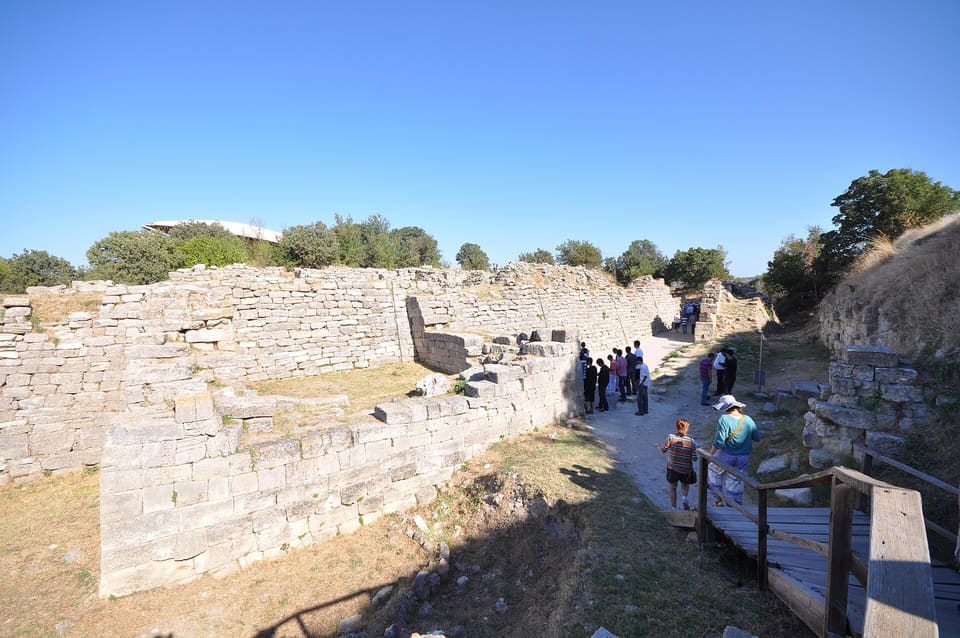
- The walls of Troy VI and VII
The stone walls of the Late Bronze Age city, with a sloping face and the zigzag “sawtooth” outline. Many scholars link this city with Homer’s Troy.
- Greek and Roman Ilion
The remains of the later city: the council house (bouleuterion), the theatre and the odeon, a small covered theatre.
Troy (Truva)
The city of Homer’s Iliad, or the nearest thing to it. Nine cities were built one on top of another on a low hill, and digging began with Heinrich Schliemann in the 1870s.
- About 3000 BCA walled village
The first settlement, Troy I, goes up on a low hill over what was then a gulf of the sea. It has stone walls from the start.
- 2500s BCTroy II
A larger citadel with stone walls and big halls round a courtyard. Schliemann later digs up a hoard of gold here and calls it Priam’s treasure.
- From about 1700 BCThe great walled city
Troy VI and VII have a citadel with sloping stone walls and towers, and a lower town spread around it. Its place at the mouth of the Dardanelles makes it a trading centre.
- About 1200 BCThe Trojan War?
Homer’s Iliad tells of a ten-year war for a city called Troy. The Late Bronze Age city here shows signs of destruction, but archaeologists cannot say whether a war like Homer’s ever happened.
- Greek and Roman timesIlion
The city is rebuilt as Ilion, later Ilium, with a council house, a theatre, an odeon and baths. Visitors come for its link with the Iliad.
- About AD 500The end
A series of earthquakes around AD 500 ends the life of the city.
- 1870sSchliemann digs
Heinrich Schliemann, a German businessman, cuts a deep trench through the mound and finds the cities below one another, nine in all. The gold he calls Priam’s treasure ends up abroad, now in the Pushkin Museum in Moscow.
- 1996 and 1998National park and World Heritage
The land round Troy becomes a historical national park in 1996, and UNESCO lists the site in 1998.
- 2018The museum opens
The Troy Museum opens beside the site in October 2018. Excavation still goes on.
Photographs
6 photographs from Wikimedia Commons, each with its author and licence.
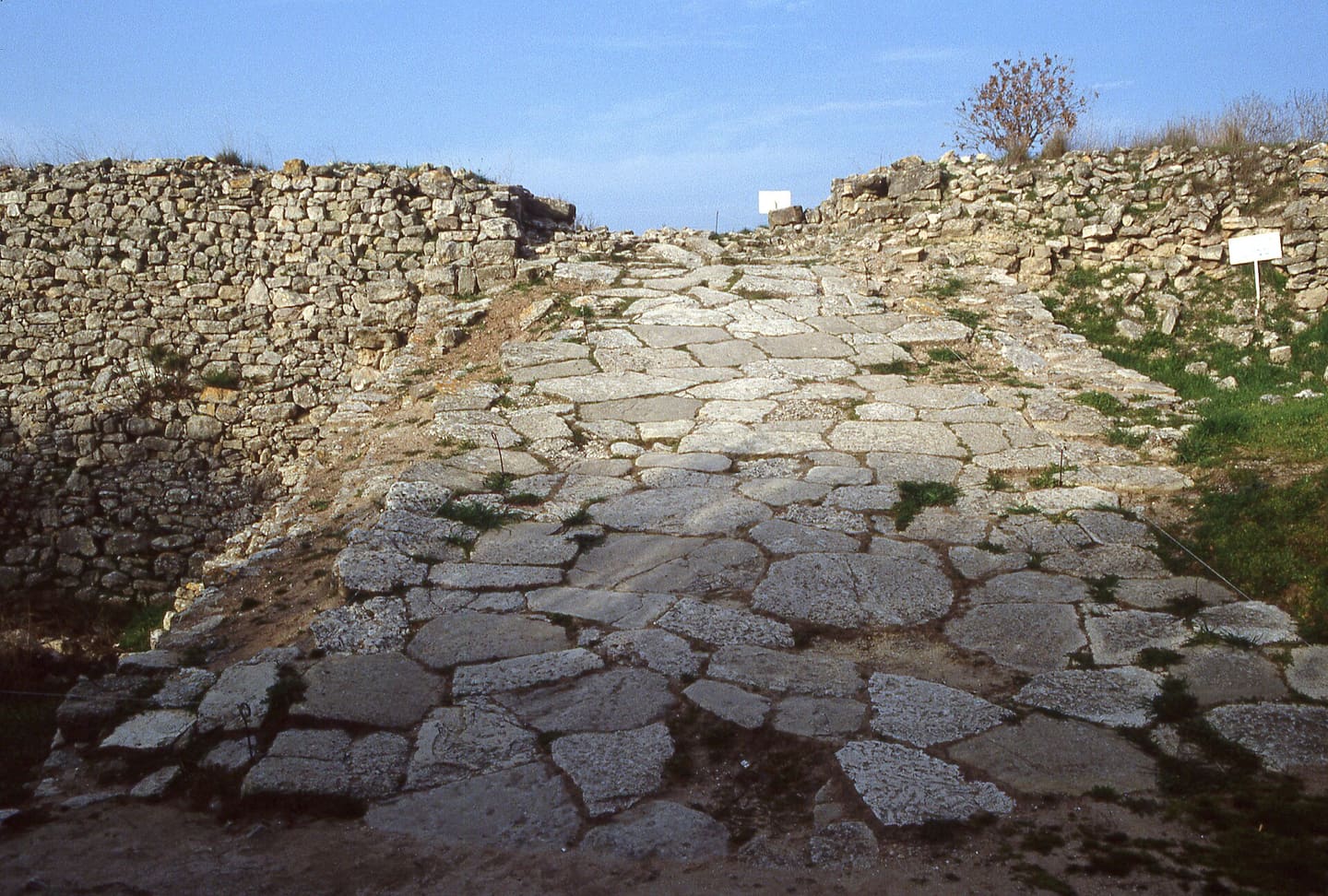
Photo: Mark Landon · CC BY 4.0 (opens in a new tab) · Wikimedia Commons (opens in a new tab)
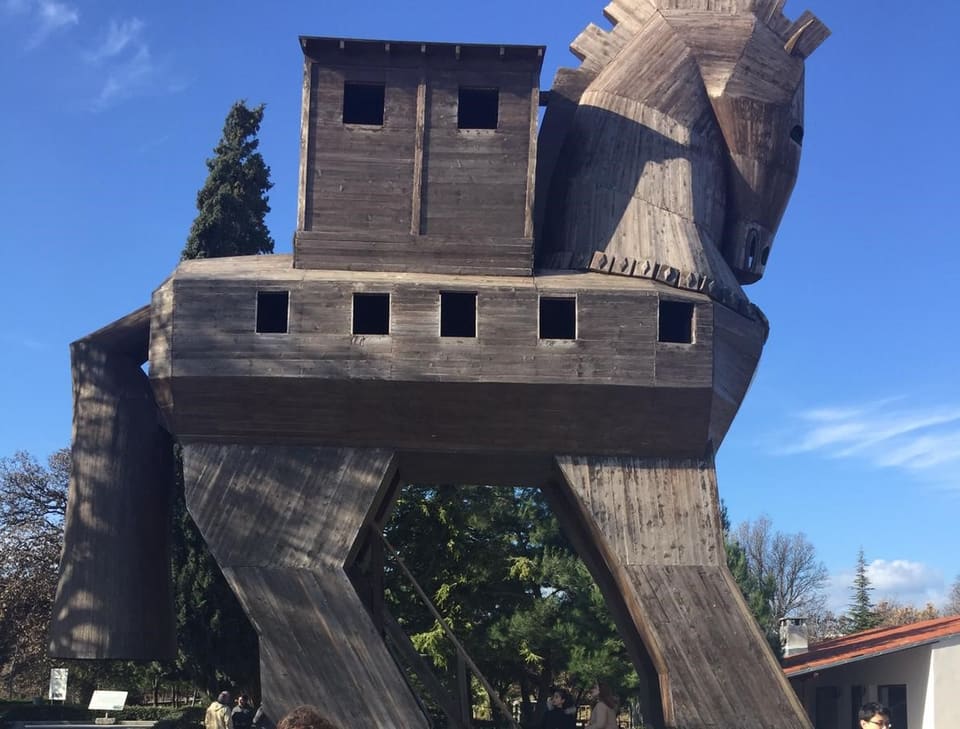
Photo: Serragok · CC BY-SA 4.0 (opens in a new tab) · Wikimedia Commons (opens in a new tab)
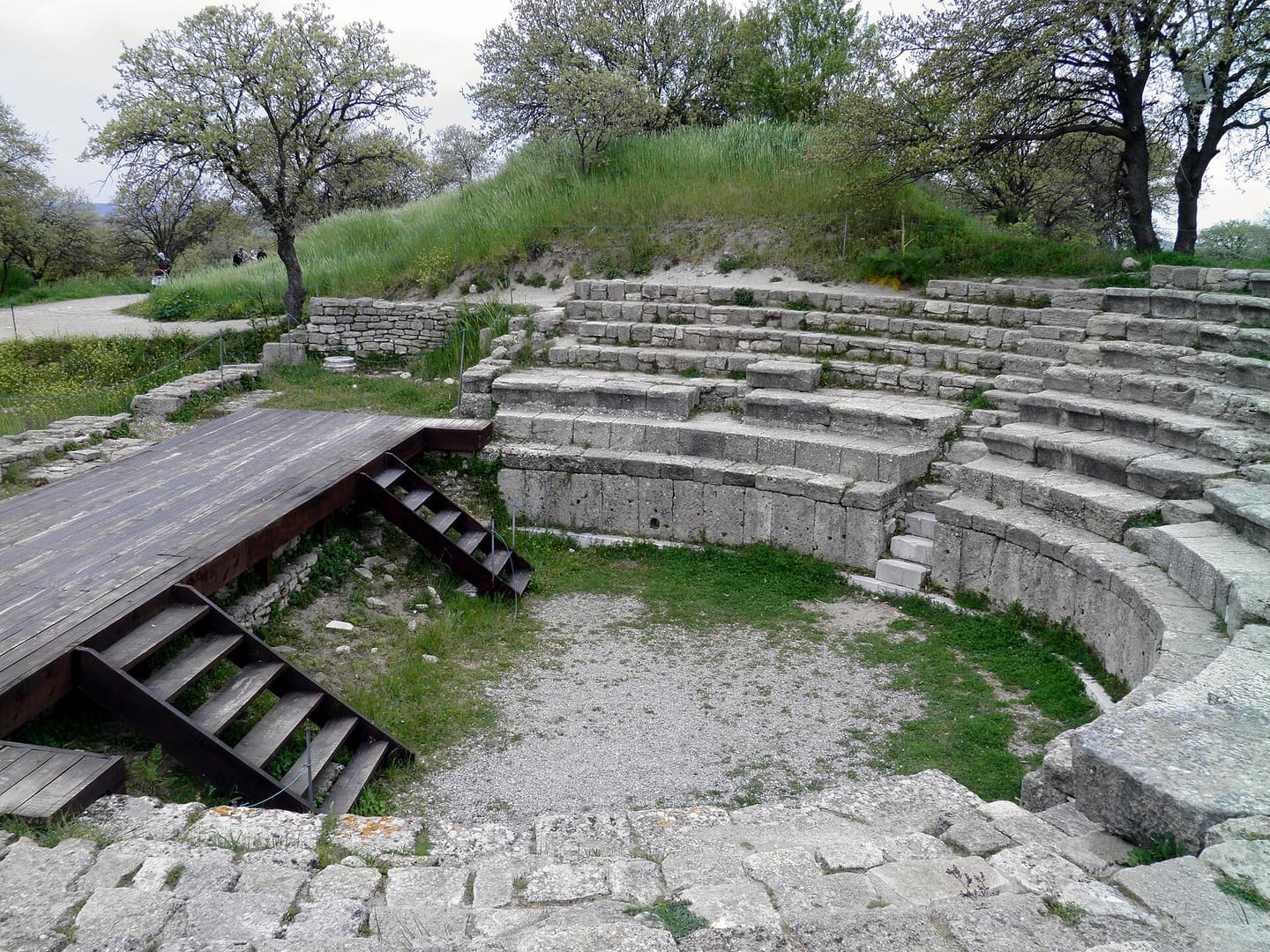
Photo: Carole Raddato · CC BY-SA 2.0 (opens in a new tab) · Wikimedia Commons (opens in a new tab)
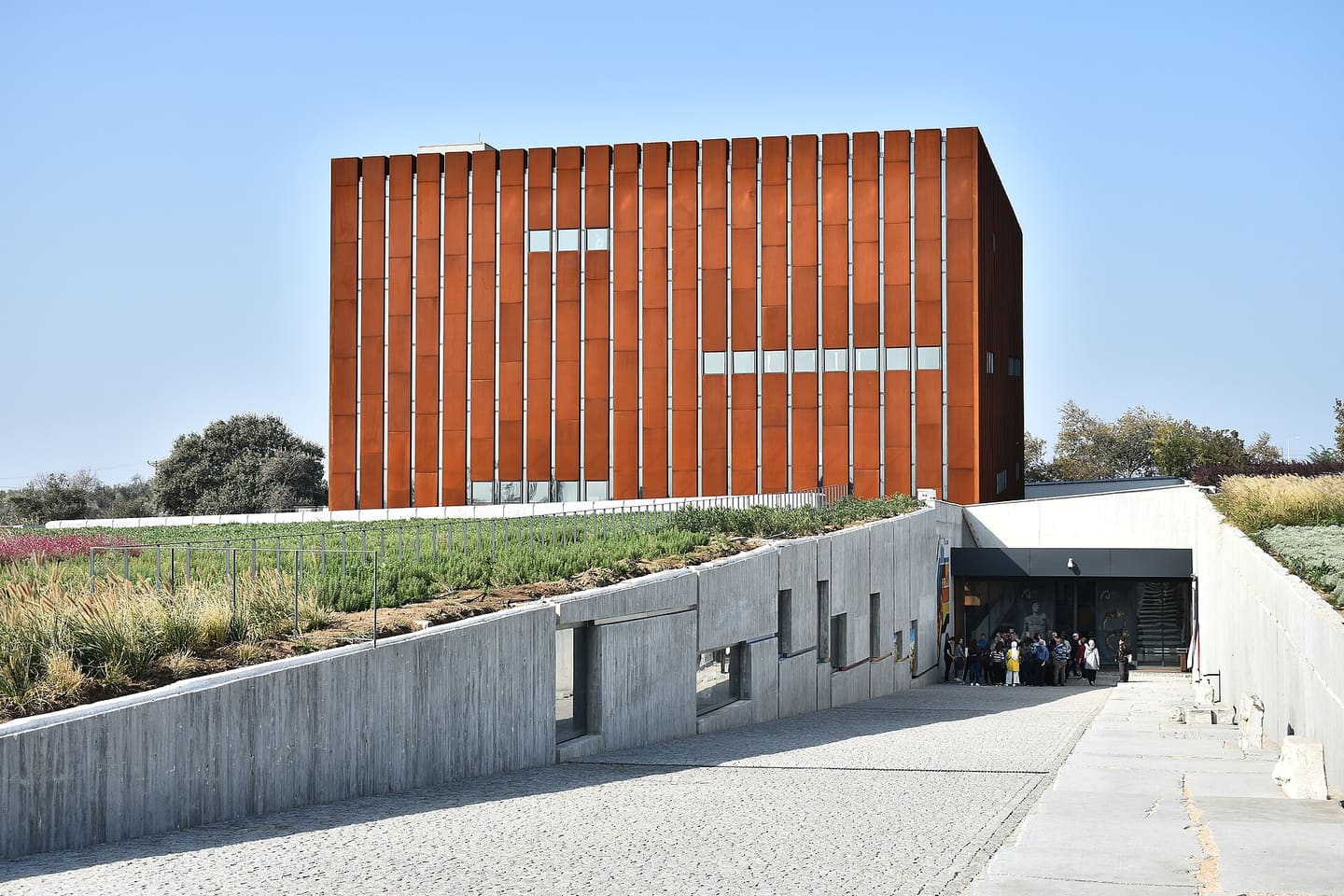
Photo: Troya Müzesi from Çanakkale, Türkiye · CC BY-SA 2.0 (opens in a new tab) · Wikimedia Commons (opens in a new tab)
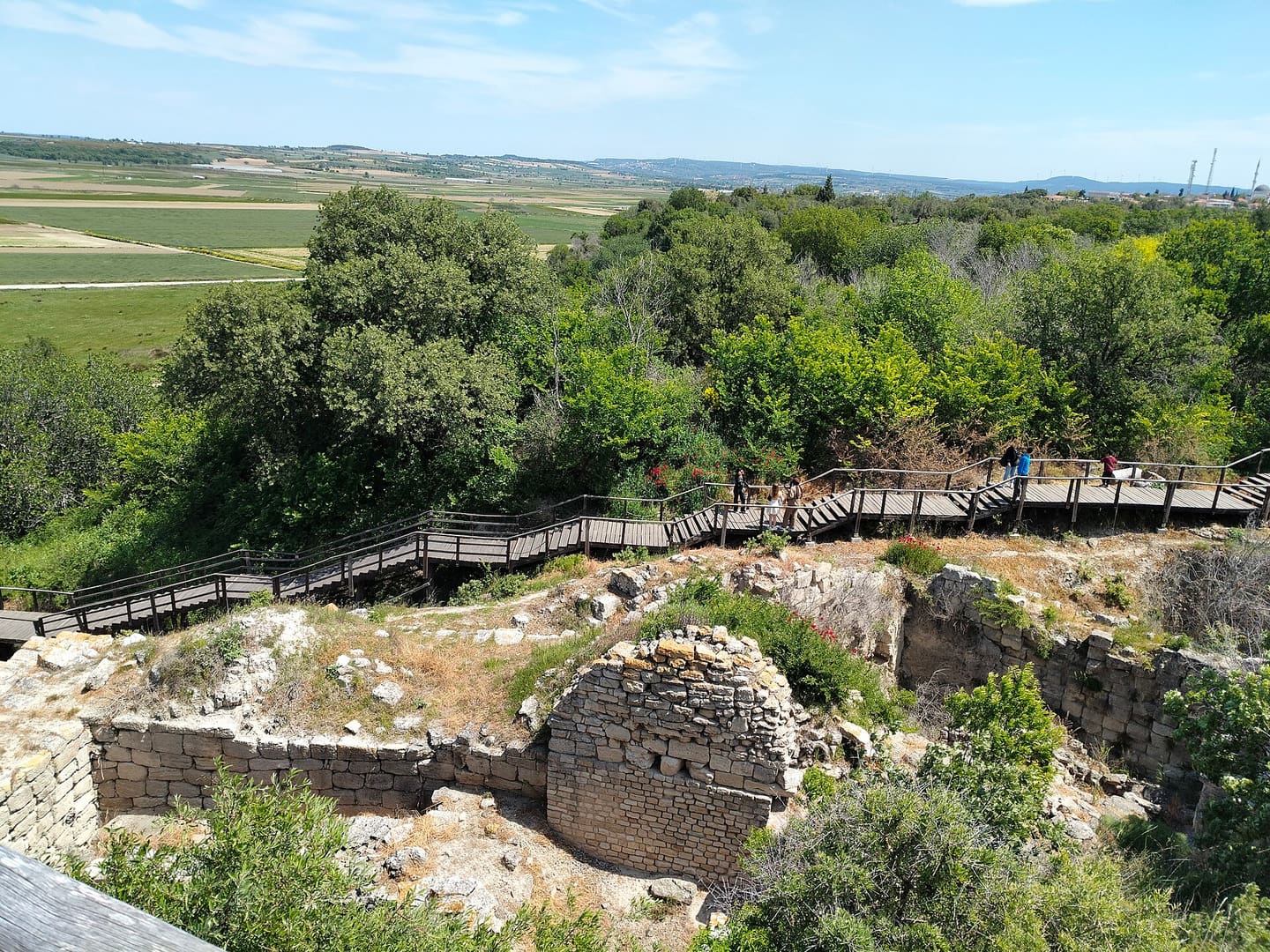
Photo: Barrowbob · CC BY-SA 4.0 (opens in a new tab) · Wikimedia Commons (opens in a new tab)
Good to know
- The ministry lists the site and the museum on two pages: see muze.gov.tr for tickets and for the museum’s own hours.
- Wear sturdy shoes. The paths are dirt tracks and boardwalks, uneven and slippery after rain.
- Much of what Schliemann found went abroad, among it the gold he called Priam’s treasure, now in Moscow.
- Assos, on the ministry’s list of nearby sites, can be added to the same trip.
- The ministry runs an audio guide for the site: see its page on muze.gov.tr.
Where its treasures are now
Troy gold jewellery (Penn Museum group)
c. 2400 BC. 24 gold ornaments from the period of Schliemann's 'Priam's Treasure', returned from the Penn Museum on indefinite loan in 2012 and now shown at the Troy Museum.
Troy Museum, Çanakkale (Tevfikiye)Polyxena Sarcophagus
c. 520–500 BC. Found at Gümüşçay in 1994, with the sacrifice of Polyxena at Achilles' tomb; the earliest known sarcophagus with a Trojan War scene.
Troy Museum, Çanakkale (Tevfikiye)Treasure of Priam (Troy gold, 'Jewels of Helen')
Held abroad. Claimed by Türkiye and by Germany; Russia keeps it under its 1998 trophy-art law
Pushkin Museum (most); some pieces in the State Hermitage, Moscow / St PetersburgTroy jewellery (24 gold pieces)
Lent to Türkiye indefinitely in 2012 (loan, not transfer of title)
Penn Museum (University of Pennsylvania), PhiladelphiaFrom here
Çanakkale
25 km. Troy, Assos and the Gallipoli peninsula.
Assos
About 53 km as the crow flies. A city on a volcanic hill facing Lesbos, with the Doric Temple of Athena on top and a small harbour far below.
Troy, Pergamon and Sardis
4 days, 6 places, Çanakkale to Manisa.
Also nearby
- 24 kmAlexandria Troas
City, Hellenistic–Roman
- museumTroy Museum
Polyxena sarcophagus
- museumÇanakkale Archaeology Museum
Troy finds
Location precise · Source (opens in a new tab)