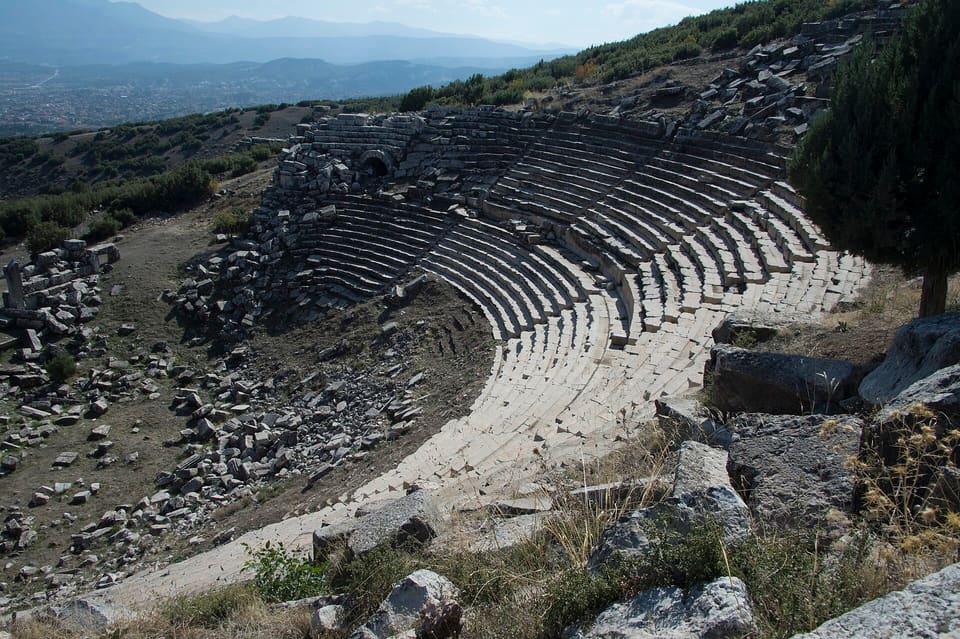
Kibyra
A hill city above the Gölhisar plain in Burdur, once the head of a league of four cities. Its theatre, stadium and agora survive, with an odeon whose floor holds a mosaic of Medusa. On the UNESCO Tentative List since 2016.
Plan your visit
For a first visit at an easy pace.
See it from the town above.
Opening hours and prices change: see muze.gov.tr (opens in a new tab).
Times are our estimates. Distances are straight lines.
Where it is and how to get there
On a hilltop in the Horzum neighbourhood of Gölhisar, in Burdur province in the south-west, looking over the Gölhisar plain. It is about 95 km from the city of Burdur as the crow flies.
The walk, with what you’re looking at
The main buildings lie within about 700 m of one another on the hilltop.
- Odeon
Built as a hall for the city council, then given a stage: a place for concerts, assemblies and trials. In its orchestra floor is a mosaic of Medusa.
- Theatre
In fine condition, its seats look out over the plain and the mountains beyond.
- Agora and the main street
The market square, and the long paved main street that runs through the city.
- Roman bath
A monumental bath of the Roman period, which the excavators have been uncovering in recent years.
- The basilica
A church of late antiquity on the hill, still being excavated.
- Stadium
Dug into the slope at the end of the ridge, with stone seats curving around a long track. Races were run here, and gladiators fought.
Kibyra
A hill city that ran its own affairs. It led a league of four cities, put thousands of soldiers in the field, and grew rich on iron and horses.
- Before 300 BCSettlers from Lydia
The geographer Strabo says the people of Kibyra were descended from Lydians who came here, and that Lydian was still spoken in the city in his day.
- From about 300 BCKibyratis
Kibyra rules a region of its own, known as Kibyratis, as a self-governing state.
- 2nd century BCFour cities, one league
Kibyra joins its neighbours Balbura, Boubon and Oinanda in a league of four. It can field some 30,000 foot soldiers and 2,000 horsemen. Its wealth is iron, leather and horses.
- Roman timesA seat of the law
Kibyra belongs to the Roman province of Asia and is the centre of an assize district of twenty-five cities. Much of what stands today, among it the odeon and the great bath, dates from these centuries.
- Late antiquityA church on the hill
A basilica with three aisles is used as a church. Graves found in it are thought to be those of the city’s clergy.
- LaterThe hill is left
The city empties. The people move down to Horzum, the village that is now Gölhisar.
- 2006 → todayDug up
Excavations begin in 2006 and still go on, uncovering the stadium, the odeon, the bath and the basilica, and finding statues of Asclepius and Serapis and long friezes of gladiators. Kibyra joins Türkiye’s UNESCO Tentative List in 2016.
Photographs
6 photographs from Wikimedia Commons, each with its author and licence.
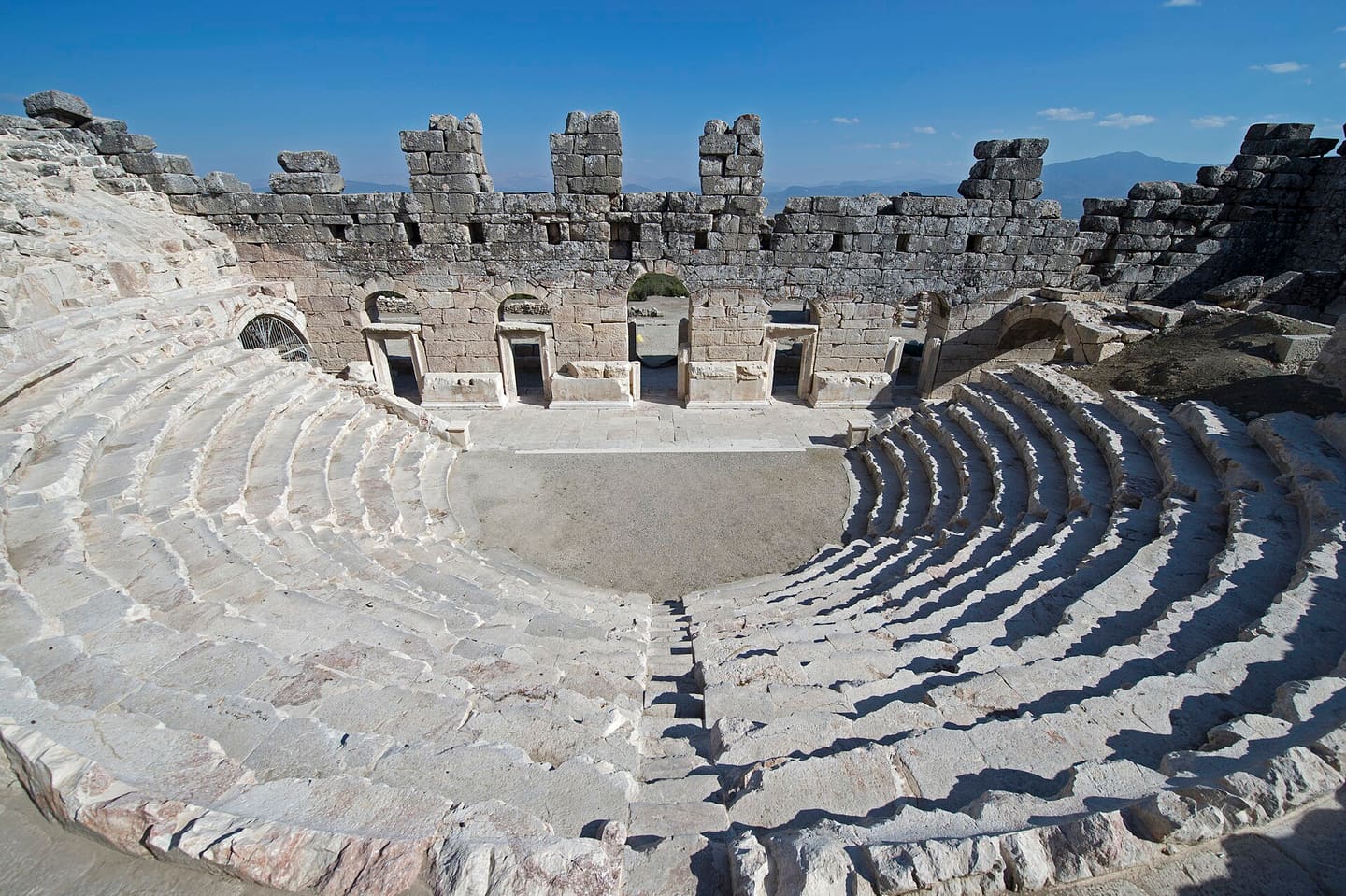
Photo: Dosseman · CC BY-SA 4.0 (opens in a new tab) · Wikimedia Commons (opens in a new tab)
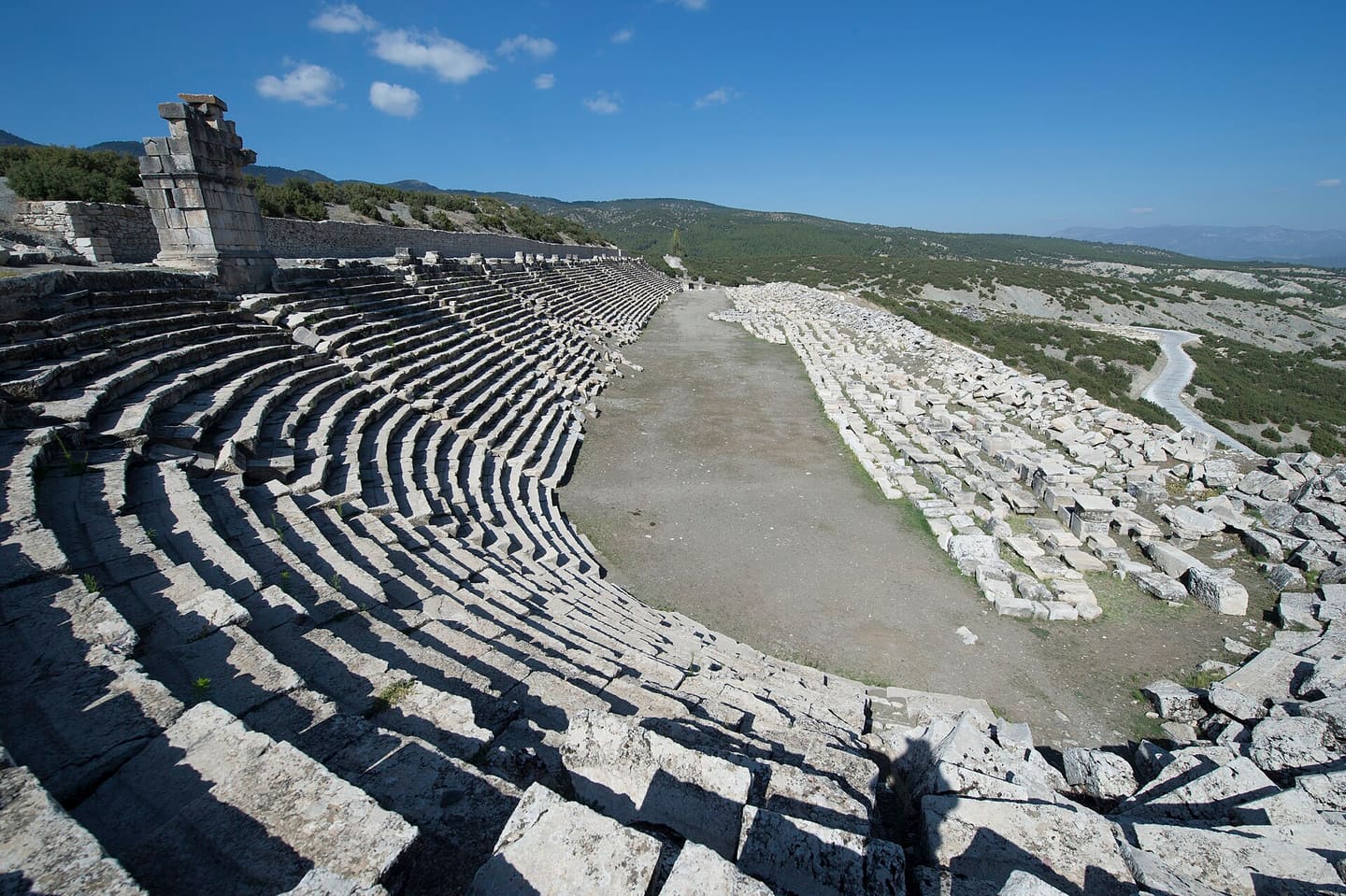
Photo: Dosseman · CC BY-SA 4.0 (opens in a new tab) · Wikimedia Commons (opens in a new tab)
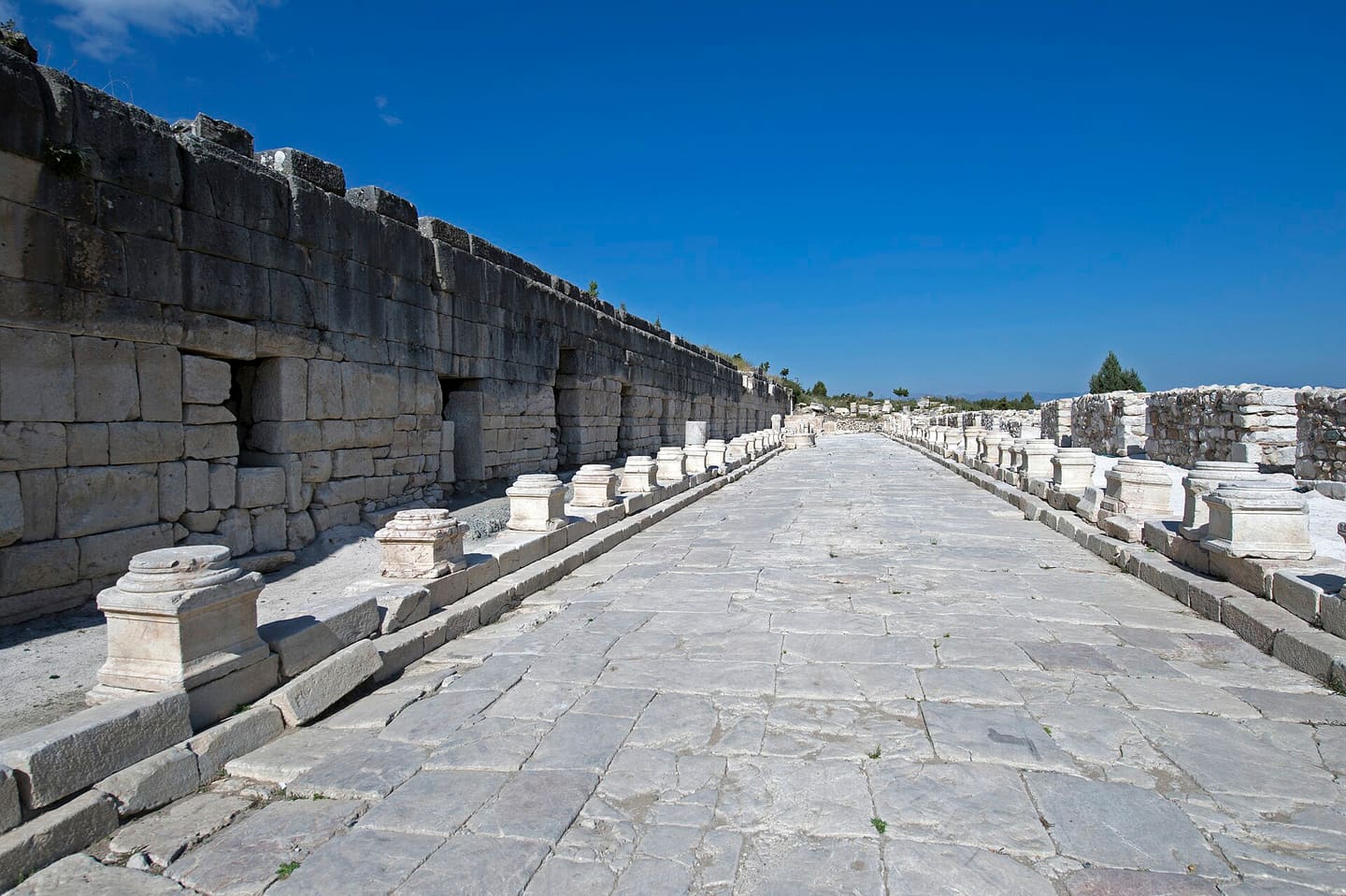
Photo: Dosseman · CC BY-SA 4.0 (opens in a new tab) · Wikimedia Commons (opens in a new tab)
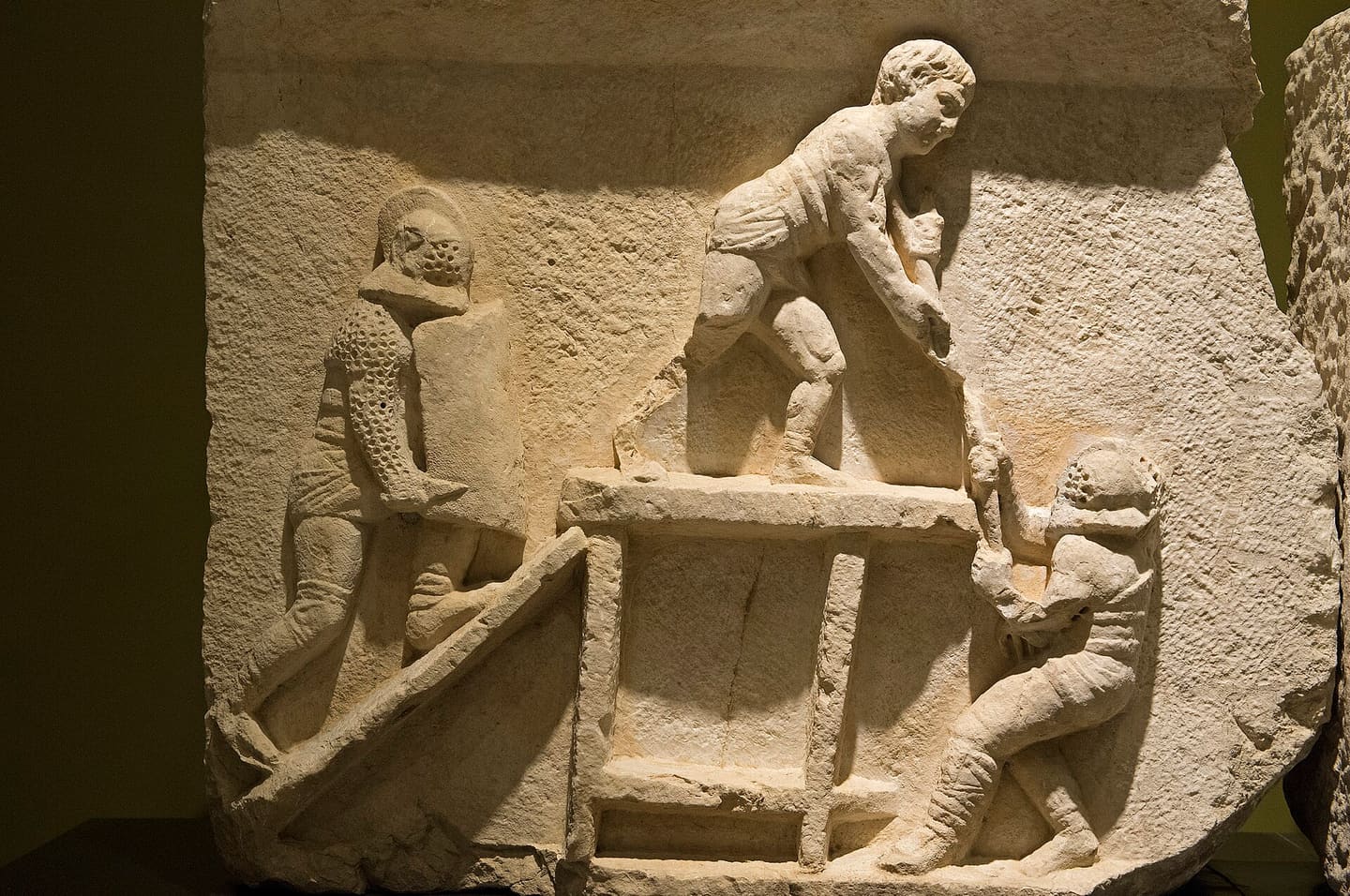
A gladiator relief from Kibyra, shown in Burdur Museum. The city’s friezes are said to be the longest found in Turkey.
Photo: Dosseman · CC BY-SA 4.0 (opens in a new tab) · Wikimedia Commons (opens in a new tab)
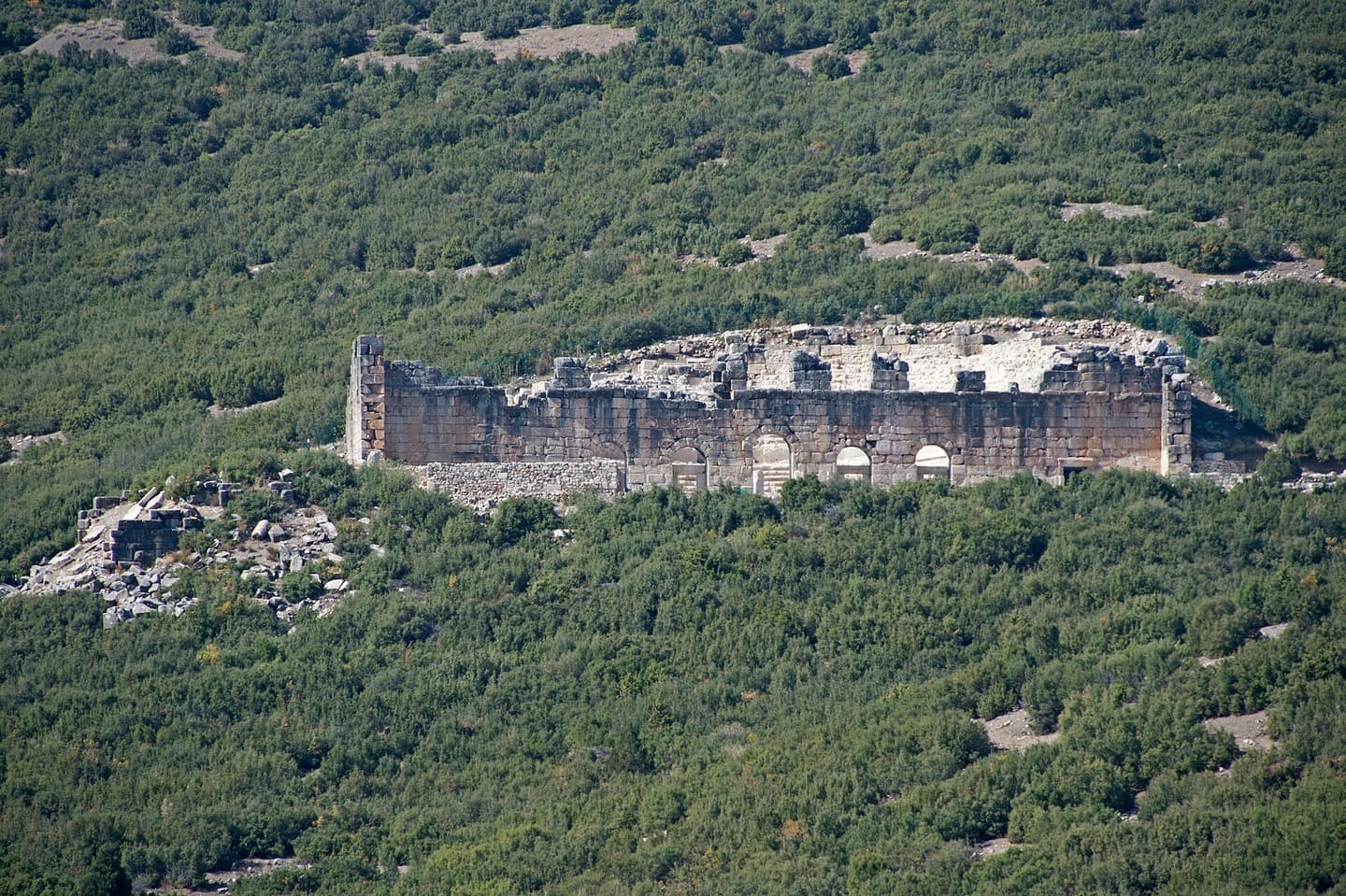
Photo: Dosseman · CC BY-SA 4.0 (opens in a new tab) · Wikimedia Commons (opens in a new tab)
Good to know
- Digging is still going on, so some buildings may be fenced off or covered up.
- Wear shoes with grip: it is a hillside site and the stone is loose in places.
- The finds, among them statues of Asclepius and Serapis, go to the Burdur Museum, about 95 km away as the crow flies. Kibyra’s gladiator friezes, said to be the longest in Turkey, are one more reason to go.
Also nearby
- museumBurdur Museum
Sagalassos & Kibyra statues, Hacılar finds
Location precise · Source (opens in a new tab)